New York City Rental Guide · Your Questions, Answered
The Flatbush Collapse, and Who Was Watching
By Jason Mezydlo · @JasonMezydlo
Jason Mezydlo · Managing Sales Partner, Gordon Realty Partners
347.286.5797 · jason@gordonrealtypartners.com · JasonMezydlo.com
622 3rd Avenue, New York, NY
I’ve spent years walking clients up and down this stretch of Flatbush Avenue, through the brick walk-ups and corner storefronts that give the neighborhood its rhythm, so Wednesday’s news landed close to home. My heart is with these families, with the neighbors who ran toward the rubble, and with the firefighters who searched by hand for more than a day. I also want to be upfront that this piece is going to get a little wonky. Stop-work orders, inspection rules and staffing numbers aren’t the stuff of breezy reading, but policy is where lives get protected, and if we’re going to keep demanding more housing for Brooklyn, and I am, then we have to work together and demand real enforcement right alongside it.
On the afternoon of November 11, the three-story building at 1321 Flatbush Avenue collapsed into the excavation next door, and eight people never came home. Nicole Daniela Salvada Rodriguez was nine, and her cousin, Kevin Santiago Reyes Gonzalez, was ten. Jose Luis Caguana Cosquillo, 26, leaves behind a young child and a pregnant wife. Gabriel Siguencia, 22, a young father, had stayed late for overtime so he could send a little more money home to his family in Ecuador. We also lost Barry Mamadou, 23, Edgar Sapon, 26, Juan Daniel Salvada Guzman, 31, and Ndiaye Mamadou, 31. Eighteen more people were hurt, four of them firefighters.
How to Help
The city and the American Red Cross are running a reception center for displaced families at the Flatbush YMCA, 1401 Flatbush Avenue. Donations go through the Mayor’s Fund to Advance NYC; just choose “Emergency Relief Fund.” To ask about someone who may be missing, call 311, or 212.639.9675 from outside the city.
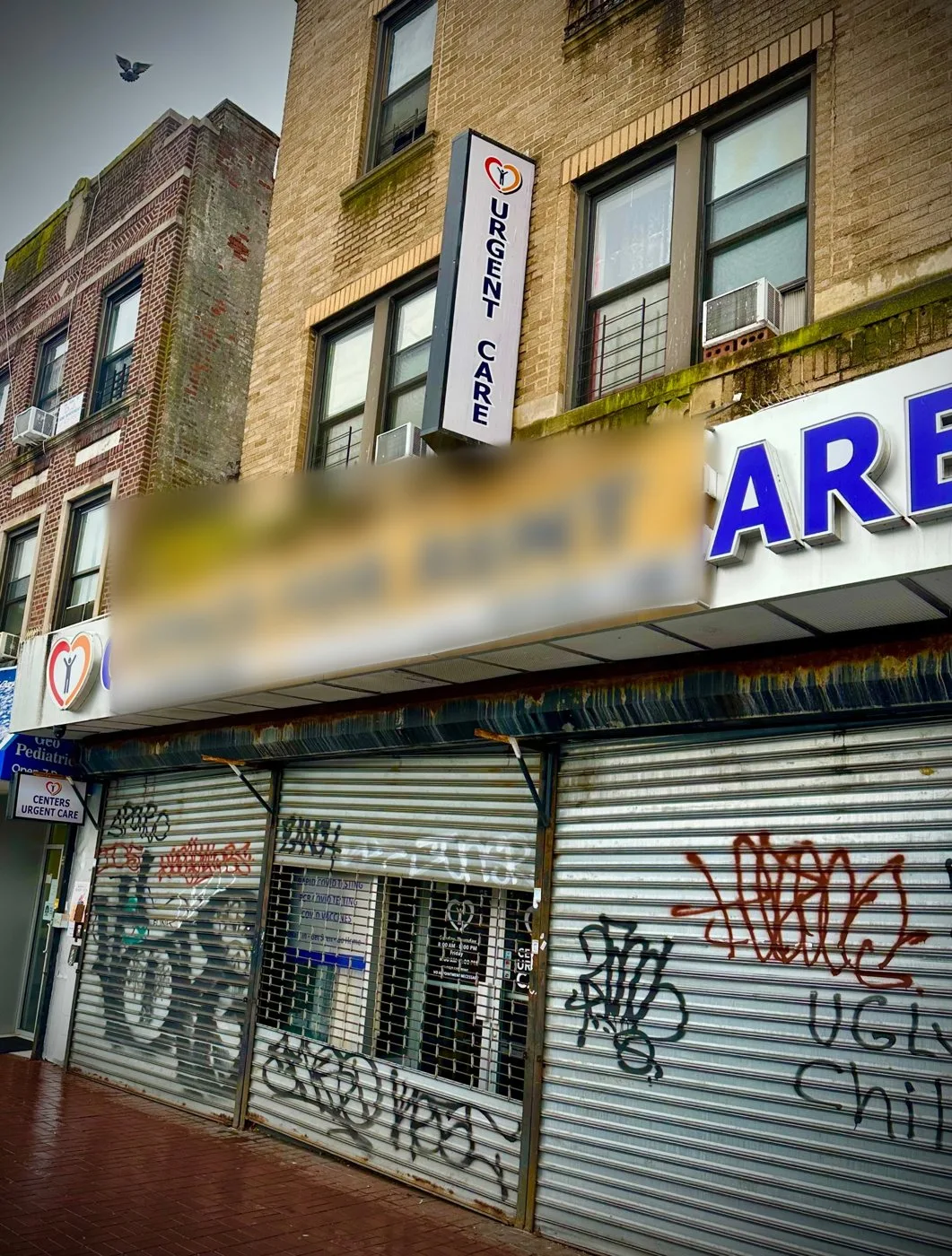
Why Enforcement, and Why Now
I believe New York needs to cut red tape so builders can deliver the homes this city is so short on, and I haven’t changed my mind. But there’s a difference between red tape and a guardrail. A six-month wait for a signature is red tape. A stop-work order, an underpinning plan and a licensed inspector on site are guardrails, the very things that let us build quickly without burying people. If those guardrails failed here, then those of us who want more building ought to be the first ones asking why. So I set out to answer three questions: how a contractor got past a stop-work order, which enforcement rules are actually on the books today, and whether someone dropped the ball.
How Did They Get Past the Stop-Work Order?
The record, as the Department of Buildings (DOB) and local reporters have laid it out, reads like this:
- March 20: DOB halted demolition at 2625 Bedford Avenue because the required safety netting and sidewalk sheds weren’t in place.
- April 23: An inspector came back and found demolition had carried on anyway.
- May 8: The order was lifted, with the city’s record reading “Demo Completed. Civil penalty Paid.” The contractor admitted both violations and paid $2,500 and $10,000.
In other words, they didn’t so much slip past the order as work straight through it, get caught, and pay. That’s how the system is built today. A stop-work order isn’t a lock on the gate; DOB checks compliance with surprise visits, and no one is stationed on site. Under DOB’s penalty schedule, working through an order costs $6,000 the first time and $12,000 after that, and the order stays in place until the fine is paid. On a lot its owners bought for nearly $4 million, that’s a line item, not a deterrent.
Two caveats matter here. That order was about protecting the sidewalk, not the excavation that later gave way, and neighbors hadn’t filed a single 311 complaint about the site before the collapse. Working through a stop-work order says a great deal about how a job is being run, but on its own it doesn’t tell us what brought the building down.
Did Someone Drop the Ball?
The cause hasn’t been determined, and investigators may well find that responsibility is spread across several hands. Still, the public record already points to five places they’ll be looking:
- The excavation design DOB approved. According to plans reviewed by Gothamist, every other neighboring building around the site was protected by steel bracing known as rakers. The one exception was the edge facing 1321 Flatbush, where the soil was instead to be cut back at a 45-degree angle, roughly 15 feet deep. DOB says the plans received a full review and met code, and its press secretary, Andrew Rudansky, described the approach as “standard industry practice.” Several engineers see it differently, as you’ll read below.
- Warnings in the project’s own paperwork. A March survey commissioned by the contractor rated the north wall of 1321 Flatbush “poor,” with visible cracks, and the project’s engineering survey noted that neighboring buildings “would need underpinning.” DOB asked for that survey to be resubmitted with more foundation detail, and the engineer of record did so that same month.
- Special inspection. As of November 12, DOB’s online system listed the required inspection of the excavation’s sheeting, shoring and bracing as “identified” but not yet “certified.” ENR points out that this doesn’t prove the inspections were skipped. Reports also conflict on whether the special inspector, MD Islam of RI Consulting Services, held a valid license: some say it lapsed in July, while Buildings Commissioner Ahmed Tigani says it runs through 2029. Islam has since asked to withdraw from the job. I’ve reached out to the Department of Buildings to confirm the license status and will update this piece as soon as I hear back.
- Monitoring. The plans called for baseline readings, weekly optical surveys, crack gauges and vibration monitors, with work to stop at half an inch of movement or a two-millimeter crack reading. No one has said publicly whether those instruments were installed, or whether anyone was reading them.
- The collapsed building itself. 1321 Flatbush carried 98 open housing violations. Kyola Lawrence, who survived, said she felt the construction inside the building again and again: “You would hear that thump and that movement in your soul.”
Here’s what the engineers are saying:
- Abi Aghayere, a civil engineering professor at Drexel University, called the unbraced slope beside an old building “a recipe for disaster.” As he put it, “With an old building like this, the room for error is very, very, very, very slim.” His advice to anyone living next to a dig: “You might see a crack, don’t take it lightly.”
- Chris Cerino, past president of the Structural Engineers Association of New York: “I would have anticipated a different detail on that side of the site.”
- Eugene Gurevich of RAND Engineering & Architecture offered the counterpoint: “As long as you’re not digging under the foundation, you don’t necessarily have to put up steel or additional measures.” In other words, the approved design may have held up on paper, provided it was built exactly as drawn.
Put it all together and the design, the inspections and the monitoring are all still open questions. A contractor that worked through one stop-work order on this very site is going to get a hard look on the other three.
What Could Be Done
Below are six practical ideas for keeping people safe while Brooklyn keeps building. For each one I checked what’s actually true today, and what would need to change.
1. Give stop-work orders teeth beyond one site
Where things stand: A stop-work order covers a single site, and ignoring one doesn’t automatically touch a contractor’s other jobs. DOB does have the power to go further. It can suspend a general contractor’s registration, stop work at every site where that contractor holds the permit, and ask the city’s administrative court to strip their ability to pull permits altogether. But that power is used at DOB’s discretion, and usually only after a long pattern. In January, DOB suspended a Bronx contractor after a wall collapse that marked the seventh time he’d been cited for working through an active stop-work order, with Commissioner Tigani pointing to “repeated violations, including the failure to comply with Department-issued Stop Work Orders.” This week’s inspections of more than 160 sites tied to six companies on the Flatbush project use that same tool, only after the fact.
What could change: Make it automatic. A second stop-work violation within a set window, say two years, would trigger an immediate review of every open permit held by that contractor and owner, with fines scaled to the size of the project rather than a flat fee.
2. Measure, and share the measurements
Where things stand: When digging near a neighbor, the Building Code requires a monitoring plan, but the readings from crack gauges, vibration monitors and optical surveys go only to the project’s own engineer, its special inspector, the contractor and the owner. DOB hears about a problem only when a hazard isn’t corrected right away. A stricter city rule sets hard limits on vibration and movement, but it applies only to landmarked and historic buildings, and its reports aren’t due until 30 days after the excavation is finished.
What could change: Extend those limits to any building more than 80 years old that sits beside an excavation, and require readings to be uploaded to DOB’s online system as they’re taken, with automatic alerts to DOB and to the neighboring building’s owner and tenants whenever a stop-work threshold is crossed. The sensors are already on most job sites. What’s missing is anyone outside the project seeing the data.
3. A second set of eyes on old buildings
Where things stand: The city doesn’t require it. Excavation and shoring plans are designed by the developer’s own engineer and reviewed by DOB’s plan examiners. An independent structural peer review is required only for the very largest projects: buildings over a million square feet, taller than 600 feet, or a few other special cases. A shoring plan beside a century-old walk-up doesn’t come close, and the special inspector, though licensed by the city, is hired and paid by the owner.
In fairness to DOB, that threshold is written into the Building Code, which is the City Council’s to change. DOB’s examiners did review this design, and the department has ordered independent reviews after failures, as it did at the former Pfizer headquarters in Midtown this summer. Engineers have been saying for a while that the bar is set too high. Georgi Petrov of Skidmore, Owings & Merrill called outside review on older buildings “a very good idea” and “another level of letting you sleep at night,” and Chris Cerino has estimated that a peer review runs roughly $100,000 to $200,000 on a large project. Council Member Pierina Sanchez, who chairs the Housing and Buildings Committee, said this summer that she’s studying new triggers for structural review.
What could change: A lighter, faster peer review for any excavation within ten feet of a pre-war building, signed off before the first bucket of dirt comes out. On a mid-size job, that’s a modest cost next to the risk.
4. Check credentials automatically
Where things stand: DOB does confirm that the architect and engineer on a filing are licensed, which a 2016 audit by then-Comptroller Scott Stringer bore out. What I couldn’t find is any sign that DOB’s system holds up work when a special inspector’s license lapses, or when a required inspection sits uncertified. That’s exactly why the conflicting reports on this inspector’s license matter so much. The same audit found DOB was reviewing only about 11 percent of self-certified applications against a 20 percent target, and that 68 percent of the ones it did review had problems. This project’s excavation plans did get a full DOB review, so self-certification isn’t the issue here, but the audit shows how thin the checking can run.
What could change: DOB’s system should keep an excavation from moving past each stage until the special inspector of record has certified that stage, and it should flag any job whose inspector’s license or registration has lapsed.
5. Staff the agencies that keep us safe
Where things stand: DOB has 168 vacancies, more than 9 percent of its budgeted staff, though the department says 63 recent hires have cut its inspector vacancy rate in half. The Department of Investigation (DOI), which polices DOB, has 272 open positions. Together they oversee the city’s 1.1 million buildings and roughly 44,000 active construction sites. In July, State Comptroller Thomas DiNapoli found that the average wait from application to approval had climbed to 20.3 days in 2025, up from 8.3 in 2020, and that non-emergency enforcement inspections were taking 17.6 days, up from 11.8. He wrote that DOB “struggled to respond to secondary demands and development requests promptly,” and urged the city to revisit whether its approved headcount is still the right target.
That last point matters, because I couldn’t find a published, independent estimate of how many inspectors DOB actually needs. Today’s yardstick is the city’s own budget, and the state comptroller is questioning whether that’s enough, which is a question I plan to put to his office and to the Citizens Budget Commission.
Council Member Sanchez told CBS New York that DOB is “absolutely doing more with fewer people,” and that “it’s troubling because they’re the ones that are responsible for keeping construction sites safe.” City Council Speaker Julie Menin has promised, “We must and we will ensure that every single one of those positions is immediately filled.” And Mark Peters, a former DOI commissioner, warned that when oversight thins out, “that’s when corruption can blossom.”
For builders, this is the point I keep coming back to: a fully staffed DOB means faster approvals for the good operators and a closer eye on the bad ones.
6. Real accountability
Where things stand:
- Brooklyn District Attorney Eric Gonzalez’s office says it is working with DOB and law enforcement “to determine whether any criminal conduct contributed to this tragedy,” and Attorney General Letitia James has said DOB will run its own full investigation.
- The city has brought in an independent engineering firm to report on the cause, which Mayor Zohran Mamdani called “standard practice for this kind of a tragic incident.”
- DOB has issued a full stop-work order and is inspecting more than 160 sites tied to six companies on the project.
- Because at least two of the people killed were working on the site, Carlos’ Law could come into play. Signed in December 2022, it allows fines of up to $500,000 when a company’s conduct causes a worker’s death, though it doesn’t cover residents or passersby. There’s precedent, too: after a worker died at 656 Myrtle Avenue in 2015, a contractor was convicted in 2019.
What officials are saying:
- Mayor Mamdani: “A tragedy of this magnitude demands a comprehensive and thorough investigation,” adding that “we will hold them fully accountable.”
- Council Member Farah Louis, who represents the area, called for making sure “every negligent owner, contractor, and entity is held fully accountable under the law.”
- Speaker Menin: “We also will ensure that we strengthen the building codes, the building rules, and regulations.”
- Attorney General James: “anyone found responsible will be held to account in the days ahead.”
- Public Advocate Jumaane Williams: “We want to make sure that we’re speaking up for them, that they are not forgotten.”
- Rev. Al Sharpton: “This is a human catastrophe that most likely could have been avoided.”
What accountability could look like: Fines scaled to a project’s value instead of flat penalties. Real license consequences for the engineers and inspectors who sign off on the work, not just fines for the contractor. A public list of repeat offenders that follows owners and contractors from one LLC to the next. And a public report on this collapse, released on a set date, so the families and the neighborhood aren’t left waiting.
Show up!
Community Board 17 meets on November 18. Community boards don’t issue permits, but they’re where neighbors, elected officials and city agencies end up in the same room, and that makes them a good place to ask these questions out loud.
Is There Corruption at the DOB?
Some outlets have led with this question, and it’s always a valid one to ask when a building comes down and people die. But here’s what I found: as of today, no investigator, official or news report has alleged that bribery played any part in this collapse, and anyone saying otherwise is getting ahead of the facts. But the question doesn’t come out of nowhere. In March, prosecutors charged a former DOB supervisor with taking more than $75,000 in cash and trips to steer approvals on more than 300 projects, and in 2024 a Queens inspector was charged with taking bribes to close out complaints. Those are charges, not convictions, and none of them involve Flatbush. The best defense against both corruption and carelessness turns out to be the same: enough inspectors, data that people outside a project can actually see, and penalties that cost more than the shortcut.
If There’s Construction Next to Your Home
- Photograph your walls and ceilings now, so you have a record.
- Watch for new cracks, sticking doors or floors that suddenly feel off, and report them to 311 right away.
- Ask the developer for its monitoring plan, and look up the job’s permits and violations on DOB NOW.
- If something feels wrong, trust that instinct and make the call.
Questions About Your Building?
If you rent or own in Flatbush and you’re wondering what all of this means for your building, your lease or your plans, reach out. I’m here to help you make sound, safe decisions in a neighborhood I care about.
Reach out to me at 347.286.5797, jason@gordonrealtypartners.com, or JasonMezydlo.com, and follow along on Instagram at @JasonMezydlo for more on building and living well in Brooklyn.
Sources
- Developer at Brooklyn collapse site had record of flouting orders from city agency, Gothamist
- Engineers question city-approved plans after Brooklyn building collapse, Gothamist
- Eight Dead, 18 Injured in Brooklyn Building Collapse Next to Construction Site, ENR
Show all 19 sourcesShow fewer
- ‘May we know their names’: Brooklyn mourns victims of deadly Flatbush building collapse, amNY
- Staff shortages at DOB and DOI call into question the safety of 1.1 million buildings in New York City, CBS New York
- Brooklyn building collapse raises questions about city oversight and safety precautions, Associated Press via KSAT (November 2026)
- Local Leaders Demand Accountability in Deadly Flatbush Building Collapse, City Limits
- Statement on the Flatbush building collapse, Brooklyn District Attorney’s Office
- Suspension of a general contractor’s registration, NYC Department of Buildings (January 2026)
- Buckled Midtown tower’s plans weren’t peer reviewed. Some engineers say they should’ve been, Gothamist
- NYC Council eyes oversight rules after Pfizer scare, The Real Deal (July 2026)
- DiNapoli: NYC Department of Buildings meets critical goals, lags on lower-priority issues, Office of the New York State Comptroller (July 2026)
- Report identifies flaws in DOB’s auditing of professionally certified applications, CityLand
- Governor Hochul signs legislation establishing Carlos’ Law, Office of the Governor (December 2022)
- Collapsed Flatbush building, adjacent job site have history of violations, The Real Deal (November 2026)
- Mamdani announces inspections at sites linked to disaster, amNY
- Cleanup and investigation continue at site of Brooklyn building collapse, CBS New York (November 2026)
- What we know about the victims, ABC7 New York
- Indictment of a former DOB plan examiner, NYC Department of Investigation and Manhattan District Attorney (March 2026)
About Jason Mezydlo

Jason Mezydlo is Managing Sales Partner at Gordon Realty Partners and has worked in New York City real estate since 2012. A graduate of the Harrington College of Design with a BFA in interior design, he brings a designer’s eye to every search, helping clients see what a space can become before they sign. Jason began his career in commercial leasing, guiding small business owners through site selection, lease negotiation and space planning, before moving into Manhattan’s luxury rental market and home sales across Manhattan and Brooklyn. A longtime Brooklyn resident, he pairs market expertise with a deep love for the city’s history, art and architecture.
347.286.5797 · jason@gordonrealtypartners.com · JasonMezydlo.com · @JasonMezydlo
Gordon Realty Partners · 622 3rd Avenue, New York, NY · NYS Licensed Real Estate Salesperson