New York City Rental Guide · Neighborhood History · The Gowanus Series
Fourth Avenue, Where the Gowanus Boom Began
From the desk of Jason Mezydlo · @JasonMezydlo
Jason Mezydlo · Managing Sales Partner, Gordon Realty Partners
347.286.5797 · jason@gordonrealtypartners.com · JasonMezydlo.com
622 3rd Avenue, New York, NY
I’ve lived in South Slope since 2014, and in that time I’ve watched Fourth Avenue change faster than almost any street in Brooklyn. The wide, loud avenue that once felt like something to cross as quickly as possible is filling in with new apartment buildings, shops, bike lanes and trees, from Atlantic Avenue down through Park Slope, Gowanus and into Sunset Park. None of it happened by accident, and none of it stayed on the avenue. Fourth Avenue is the eastern edge of Gowanus, and its rezonings were instrumental in setting the stage for the Gowanus now rising along the canal. Here’s how Fourth Avenue got here, what the city changed to make it happen, and why it mattered so much for its neighbor to the west.
This is the next piece in my Gowanus series, following Gowanus Open Studios, Thirty Years of Open Doors.
A Parkway Before the Subway
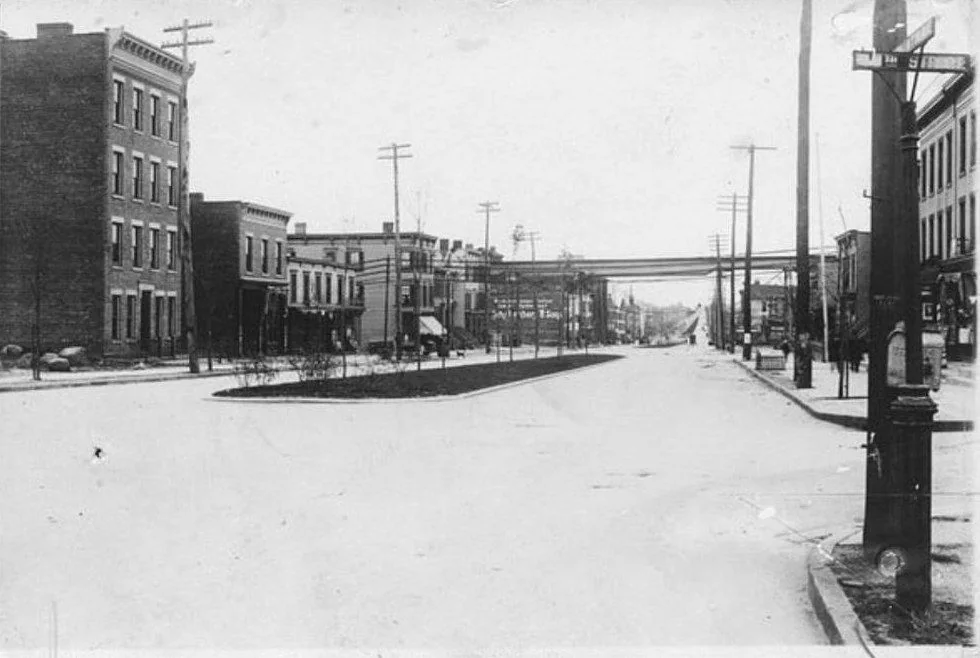
Fourth Avenue was meant to be grand. In the 1890s it was laid out as a parkway to South Brooklyn, about 120 feet wide, with planted center malls in the spirit of Manhattan’s Park Avenue. Between 1896 and 1900 the city paved it and added sidewalks, electric lights and a landscaped median, and postcards from the era proudly labeled it “Fourth Avenue Parkway.” Before that, it was a quiet country road; in 1880 the Brooklyn Eagle joked that its “chief frequenters are funeral processions on their way to or from Green-Wood Cemetery.”
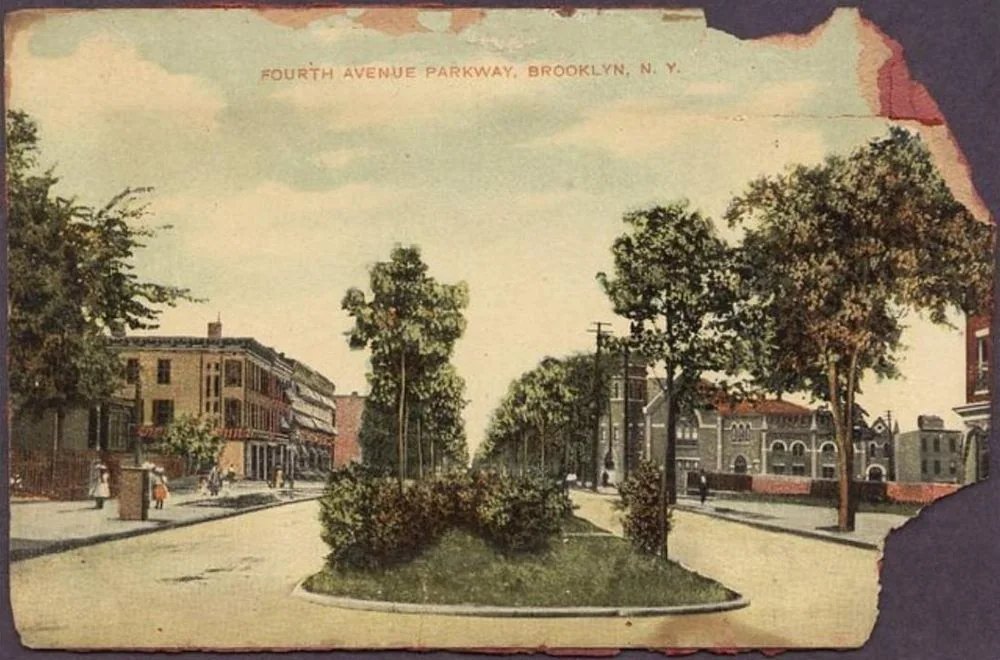
The Subway Changes Everything
As early as 1903, engineer William Barclay Parsons drew up plans for a subway under the avenue. Neighbors organized, and in 1906 the Rapid Transit Commission adopted a Fourth Avenue route to Fort Hamilton. Ground was broken on November 13, 1909, before a crowd of several thousand. On June 22, 1915, the BMT Fourth Avenue Line, today’s R local with N and D express service, opened, carrying riders over the Manhattan Bridge for the first time, with stations at Pacific, Union, 9th, Prospect, 25th and 36th Streets on day one.
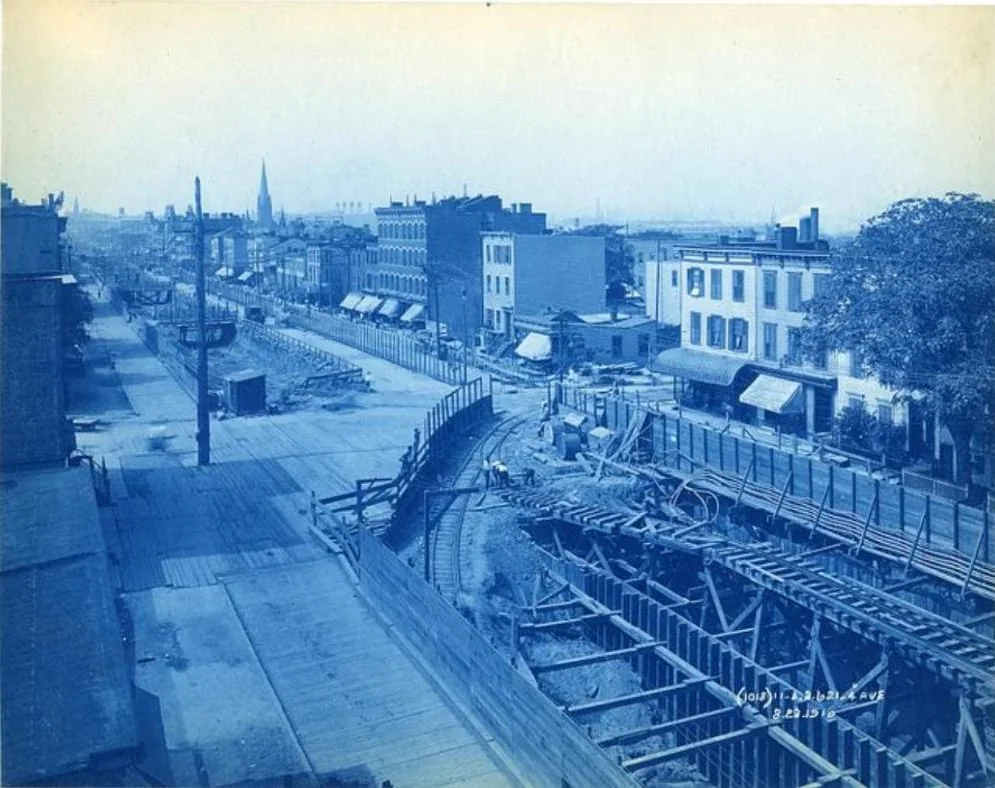
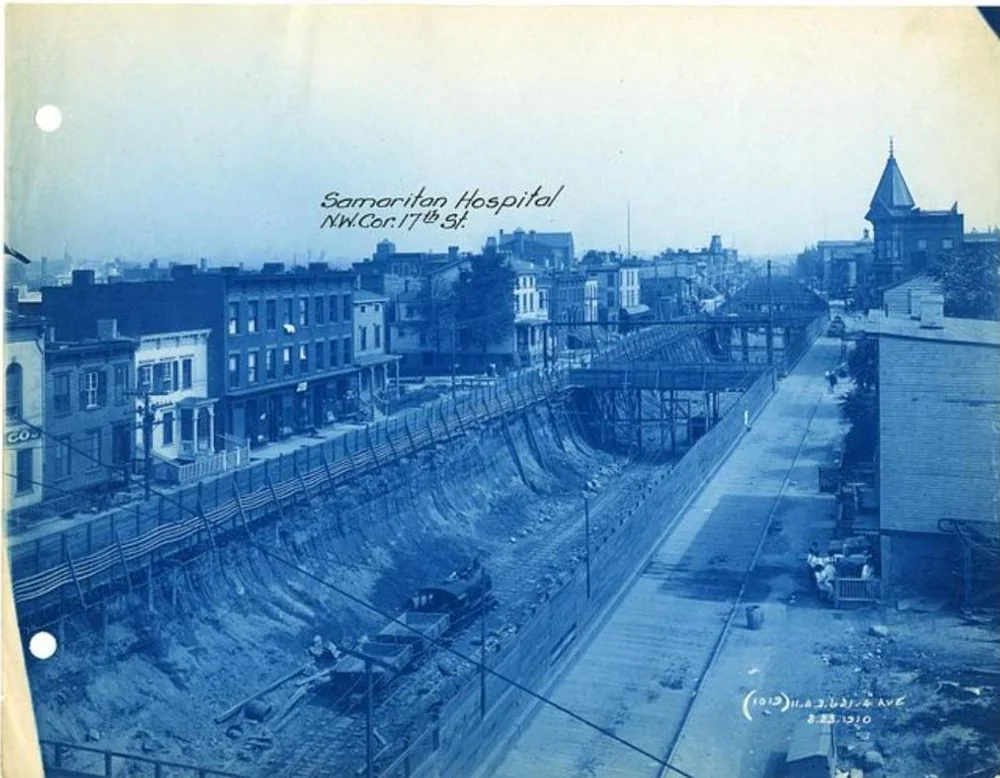
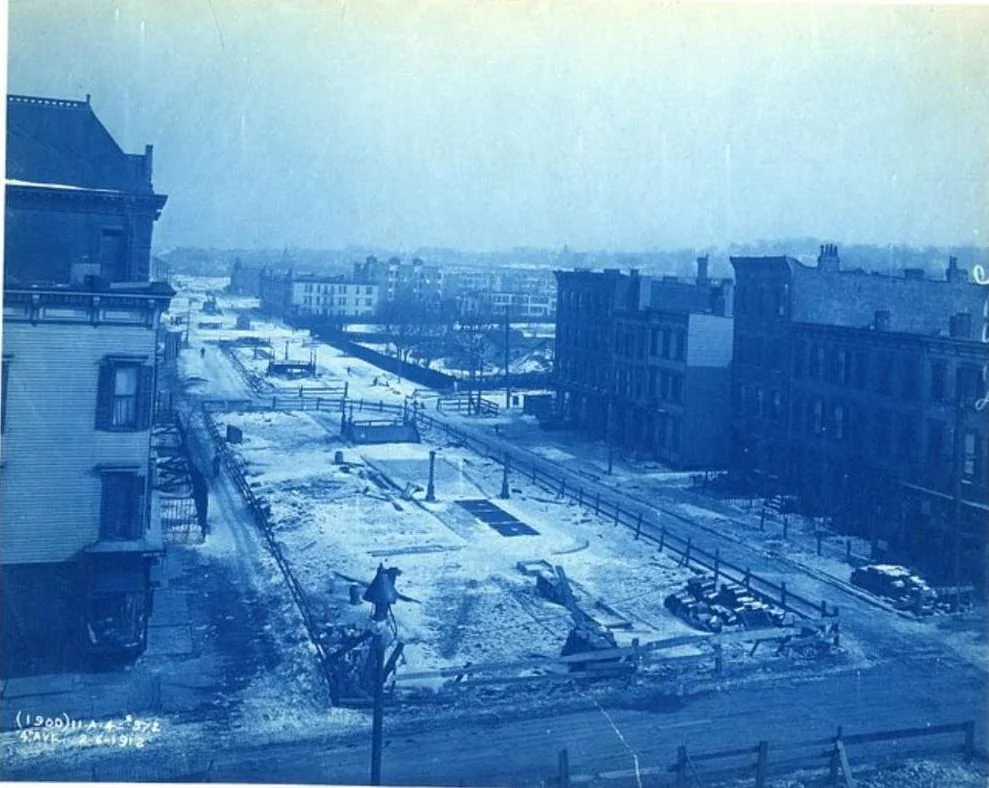
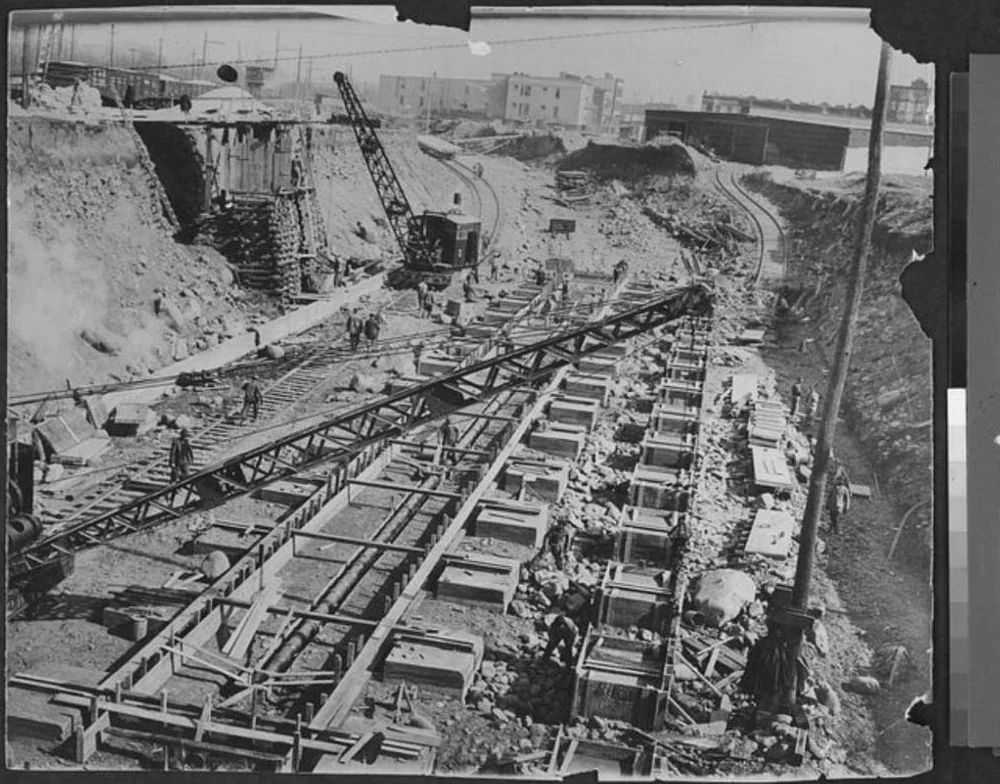
The subway brought a housing boom, but it cost the avenue its garden. Construction tore out the trees and landscaped median, which was paved over with the ventilation grates you still see down the middle today.
Auto Shops, Warehouses and a Wider Road
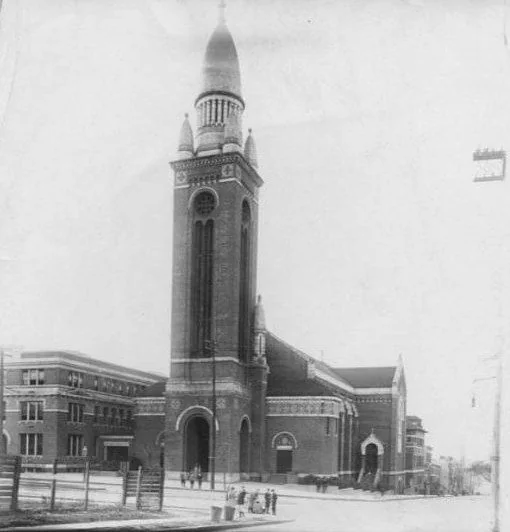
For most of the 20th century, Fourth Avenue was a working street. City Planning describes it as “historically an arterial thoroughfare lined with automotive repair and commercial uses,” with gas stations, warehouses and one- and two-story buildings replacing many of the original tenements. In 1962 the city widened the roadway between 60th Street and Atlantic Avenue by narrowing its sidewalks, and traffic dodging the Gowanus Expressway poured down the avenue. Bright spots remained, like the ornate Public Bath No. 7 at President Street (1910), later the Brooklyn Lyceum, and St. Michael’s Church at 42nd Street in Sunset Park, with its 200-foot bell tower.
2003: The City Opens the Door
The modern transformation began with the Park Slope rezoning, adopted by the City Council on April 30, 2003. To protect the brownstone blocks, the city downzoned more than 70% of the neighborhood’s side streets to low, contextual districts. In exchange, it upzoned Fourth Avenue from Warren Street to 15th Street to R8A, which allows buildings of about 12 stories (120 feet), twice the old height, at a density of 6.02 FAR. Mayor Bloomberg said the vote “sets the stage for other, similar rezonings planned throughout the city.”
Two more rezonings carried the idea south. In 2005, South Park Slope extended R8A from 15th to 24th Street with an affordable housing bonus, and in 2009 the Sunset Park rezoning mapped Fourth Avenue as R7A, allowing six- to eight-story buildings with a bonus for including permanently affordable apartments.
“A Missed Opportunity”
Developers moved quickly, but the first wave disappointed almost everyone. The 2003 rules didn’t require ground-floor shops, so many new buildings met the sidewalk with parking garages, air vents and blank walls. By 2008, City Planning itself said, “The lack of retail storefronts along 4th Avenue is a missed opportunity,” and critics nicknamed the avenue the “Canyon of Mediocrity.” Council Member Brad Lander put it bluntly in 2011: "Almost nobody really thought—I don’t remember a single advocate talking about the need for ground floor retail.“ Years later, then-Mayor Bill de Blasio, who represented Park Slope in 2003, said the development energy ”could’ve been used to create affordable housing as well and it was just squandered."
The Fix: Storefronts, Glass and Fewer Curb Cuts
The city responded with the Special Fourth Avenue Enhanced Commercial District, adopted November 29, 2011, from Atlantic Avenue to 24th Street. New buildings must now:
- put shops or community uses in the first 30 feet of the ground floor, with at least half the frontage as retail;
- make at least half of the street wall glass between roughly 2 and 12 feet above the sidewalk;
- keep residential lobbies to 25 feet wide and put driveways on side streets, not the avenue.
City Planning Chair Amanda Burden explained the goal: “Fourth Avenue is a wide, transit-rich corridor with new housing and residents — but lacks an active pedestrian environment.”
Taming the Traffic
Fourth Avenue was also dangerous, regularly ranked among Brooklyn’s deadliest roads for pedestrians. In 2012 and 2013 the Department of Transportation cut it from three lanes in each direction to two, widened the medians and added turn bans; in Park Slope, pedestrian injuries fell 61% in the first year. Under Vision Zero it became one of the city’s four “Great Streets,” and by November 2020 a protected bike lane ran from 65th Street to Barclays Center. As DOT Commissioner Polly Trottenberg put it, “For decades, Fourth Avenue was seen more as a local highway… we will continue its extraordinary transformation into a neighborhood boulevard.”
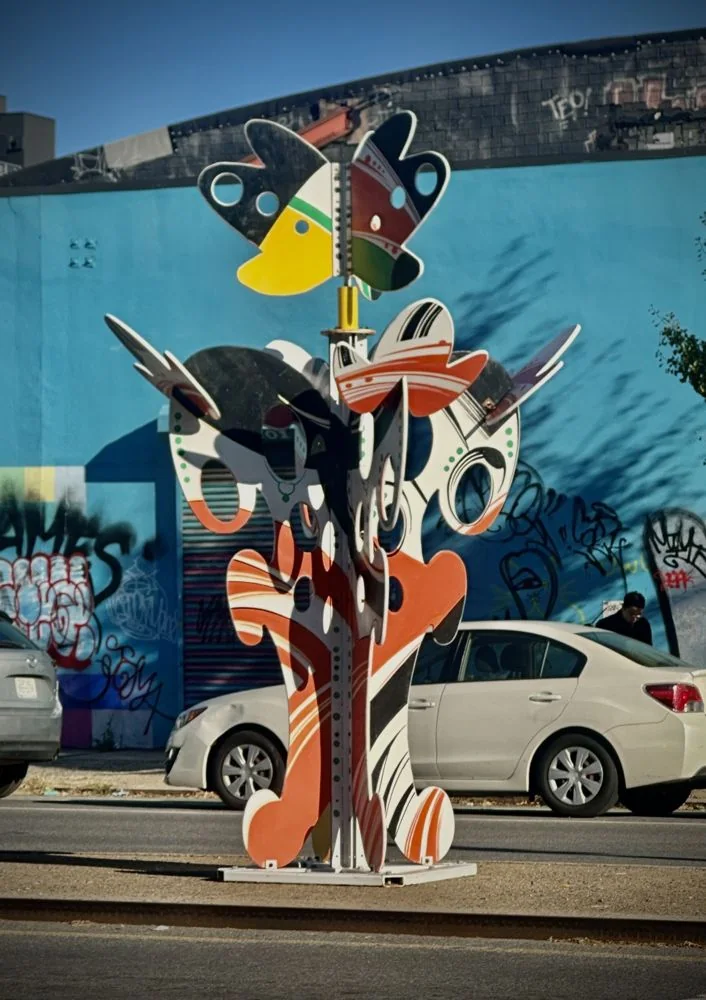
More than a century after the subway tore out the avenue’s original garden, the green is coming back. As part of the Great Streets rebuild, the city reconstructed the raised medians from 8th Street down to 64th Street and planted them wherever the subway vents below allow, and in the spring of 2024 crews put in ferns and other greenery along the way. “It’s also intended to beautify — and to do a little part with improving the environment,” Jeremy Laufer, district manager of Community Board 7, said at the time. The median has even become a gallery: this year it picked up a spinning sculpture at Second Street, which I’ll tell you more about below.
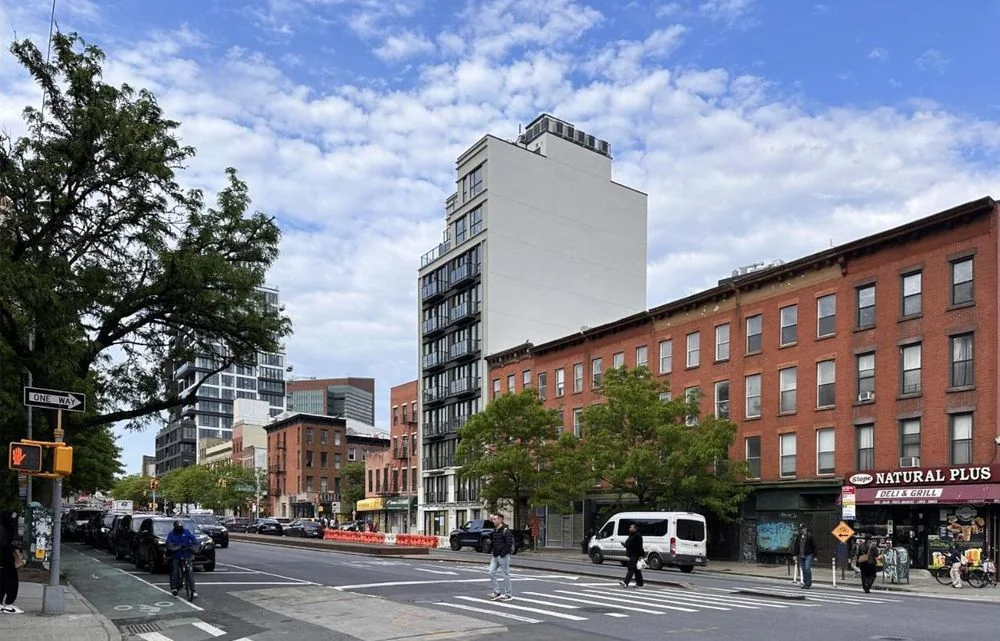
Fourth Avenue Ten Years Ago
By the mid-2010s, the avenue was caught between its industrial past and the neighborhood it was becoming. Dozens of new buildings had gone up since 2003, but many required storefronts were filled with doctors’ offices, older auto shops still dotted the blocks, and the sidewalks felt more like a pass-through than a destination. Investors were paying attention, though. According to a September 2014 Brooklyn Eagle report, six investment properties on the Park Slope and Gowanus stretch of the avenue sold for a total of $26 million in all of 2012. In just the first half of 2014, 13 sold for more than $60 million, more than double the sales and more than double the dollars in half the time.
How Fourth Avenue Set the Stage for Gowanus
When the Bloomberg administration upzoned Fourth Avenue in 2003, it pitched the new density as a “pressure valve” for Park Slope’s real estate demand, a way to protect the brownstone side streets by sending growth to the wide avenue instead. The canal blocks just to the west largely stayed zoned for manufacturing, so for years Fourth Avenue was where Gowanus got its first real test of a simple question: would people choose to live on the gritty side of Park Slope?
They did. By 2016 the New York Post, citing Halstead Property Development Marketing, counted 26 buildings in the pipeline between Pacific Street and South Slope, roughly 1,400 new apartments. Renters followed the cranes. StreetEasy figures reported by amNewYork show the median rent in Gowanus climbing from $2,400 in 2012 to $2,949.50 in 2015, passing Park Slope’s $2,850, a remarkable turn for a neighborhood best known for its Superfund canal. By the time the city began studying a Gowanus rezoning in 2016, the avenue had already shown developers, lenders and renters that the neighborhood could hold new housing.
Fourth Avenue also taught the city what not to do. The 2003 rezoning produced, in Brad Lander’s words, “many hundreds of market-rate units” on the avenue “but not one single affordable unit,” which he called “a tremendous lost opportunity for a more inclusive Park Slope.” When City Planning opened its Gowanus study in October 2016, Dave Powell of the Fifth Avenue Committee told planners, “We are still reeling from the 2003 rezoning.” The city said its plan would be guided by Lander’s Bridging Gowanus process, and under the Mandatory Inclusionary Housing rules adopted that year, new buildings in the rezoned area have to include permanently affordable apartments, the very thing Fourth Avenue never got.
When the Gowanus Neighborhood Plan finally passed in 2021, Fourth Avenue wasn’t just the precedent, it was part of the plan. The rezoning folded in the avenue from Pacific to 15th Street, committed $174 million to sewer upgrades along flood-prone Fourth Avenue, and planned 43 affordable apartments at Mercy Home on the avenue. This January, Commercial Observer called Gowanus “Brooklyn’s biggest development story,” with about 8,500 new homes expected, more than 3,000 of them affordable, and land that traded for about $40 a square foot in 2011 now going for about $300, according to JLL. “I don’t think you will find any other large-scale rezoning where you get development like this at this pace,” Anita Laremont of the law firm Fried Frank told the magazine. The boom along the canal started right here, on its doorstep.
2021: Gowanus Raises the Ceiling
The latest chapter is the Gowanus Neighborhood Plan, approved by the City Council 47 to 1 on November 23, 2021. On Fourth Avenue from Pacific to 15th Street, it allows buildings up to about 17 stories, raising density from 6.02 to 8.5 FAR, and applies Mandatory Inclusionary Housing, so new buildings must include permanently affordable apartments. It also kept the requirement for active ground floors and set aside the city-owned Garfield substation lot at 276 Fourth Avenue for mixed-income housing.
Old Bones, New Swagger
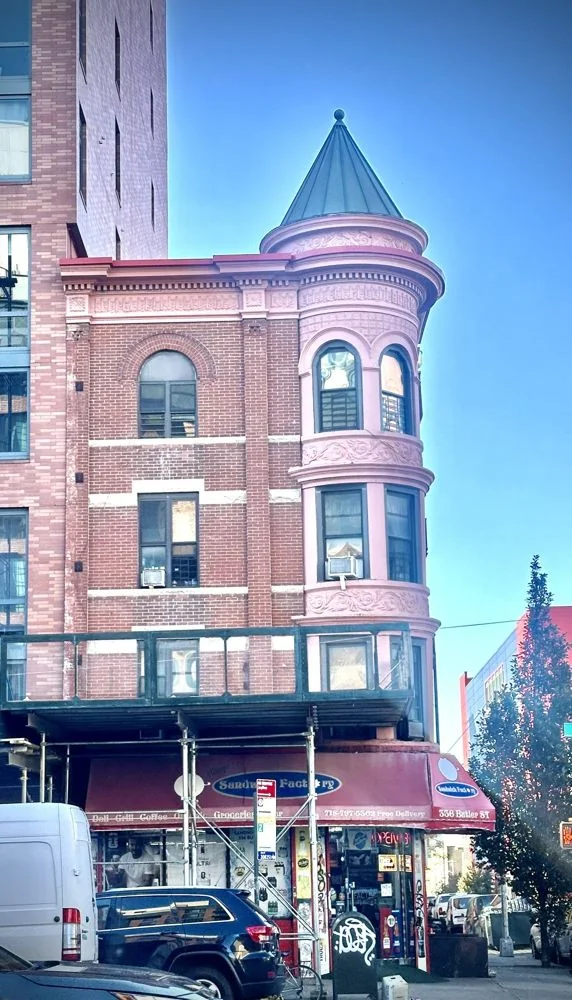
Walk Fourth Avenue today and you’re looking at two Brooklyns at once. Glass and metal towers with rooftop pools stand shoulder to shoulder with brick tenements, carved cornices and corner storefronts that have been here for more than a century. My favorite example is at Butler Street, where a brick corner building with a rounded turret and a copper witch’s-hat roof still holds its ground, with a deli on the ground floor, while a brand-new brick tower rises right behind it.
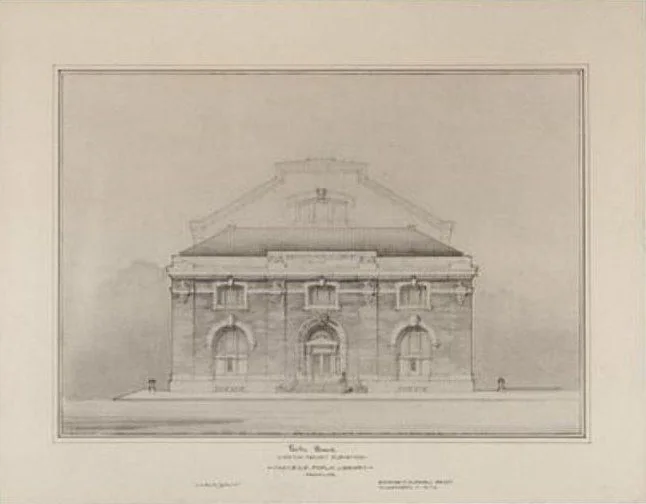
Some of the avenue’s grandest survivors share an architect. Raymond F. Almirall designed the Pacific Branch library at Pacific Street, Brooklyn’s first Carnegie library, which opened in 1904. He designed St. Michael’s Church at 42nd Street in Sunset Park, dedicated in 1905 with its 200-foot bell tower, and Public Bath No. 7 at President Street, finished in 1910. Down at 43rd Street, the 1886 Romanesque Revival precinct house by Emile Gruwe, with its squat granite columns and carved dogs’ faces, is a city landmark.
From Public Bath to PureGym
227 Fourth Avenue at President Street
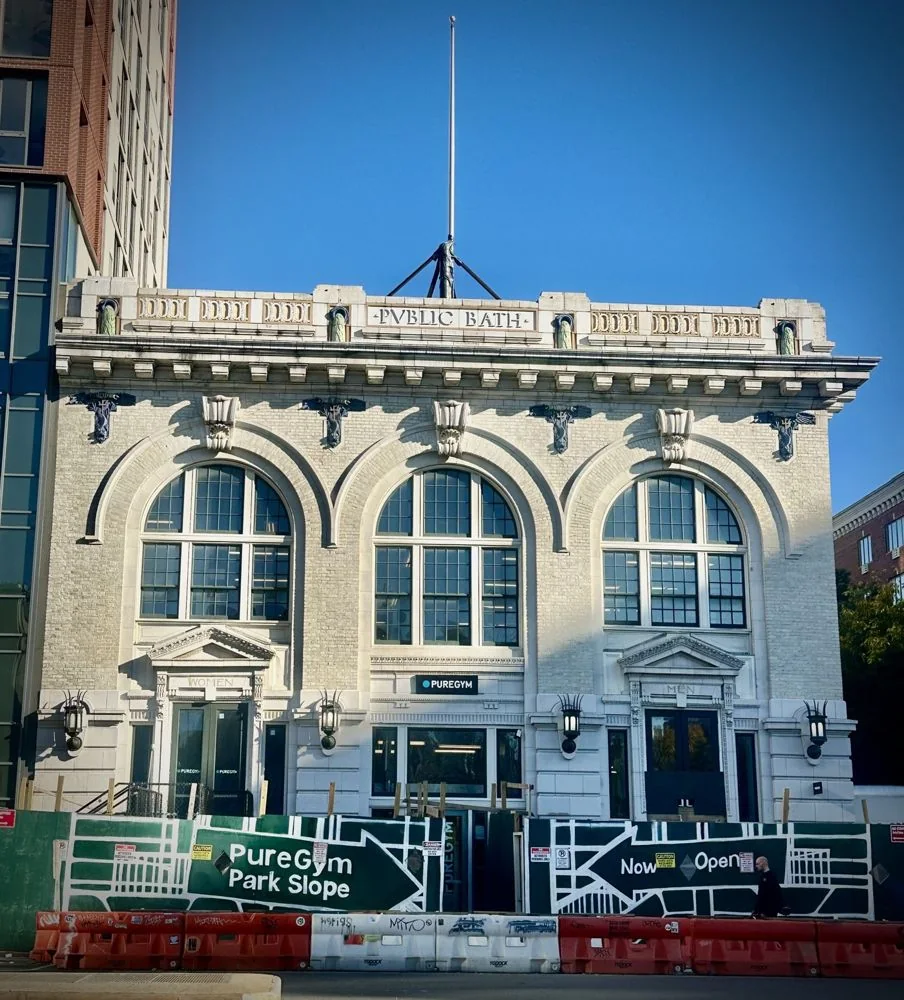
Of all the survivors, my favorite story belongs to the bathhouse at President Street. At the turn of the last century, many of the tenements around the Gowanus Canal had no place to bathe, and in 1895 New York State required its biggest cities to build public baths. Dr. Simon Baruch, who led the campaign, argued that baths “should be as free as the public parks.”
Public Bath No. 7 took four years to build and opened in 1910, the last and most ornate of Brooklyn’s seven public baths and the first in the borough with a swimming pool. Inside were 41 showers for men, 30 for women, nine tubs and a pool and laundry in the basement. Next time you pass, look up: the terra-cotta urns are glazed blue and green like water, and figures of Triton holding tridents watch over the street.
It served as a bath for about 27 years, closing in 1937. After Depression-era renovations, it reopened as a city-run gymnasium in the 1940s and stayed one until the early 1970s. Then came a transmission repair shop and years of standing empty, even after the city made it a landmark in 1984. In 1994, Eric Richmond bought it at auction and turned it into the Brooklyn Lyceum, a scrappy, much-loved arts space with three theaters, a café and a garden. The Lyceum lost the building to foreclosure, and in 2014 Greystone bought it for $7.6 million. Greystone restored it, transferred its unused air rights to the 12-story tower it built next door, and leased it to Blink Fitness, which opened on August 1, 2017, under the original exposed brick, arched windows and steel trusses of a 22-foot ceiling.
When Blink went bankrupt in 2024, PureGym won its New York gyms at auction, and the building has just reopened as PureGym Park Slope. More than a century after it was built so neighbors could get clean, it’s still where Fourth Avenue goes to wash off a long day, just with a squat rack this time.
Not everything made it. The 1866 Church of the Redeemer at Pacific Street came down for a condo tower, and five older buildings at 150–158 Fourth Avenue were demolished for a rental building. But the best of the new buildings are learning to talk to the old ones. Six Garfield kept its old corner building, reclad it and stacked new floors above it. Parlour’s arched windows borrow from the bridges in Prospect Park. And the 2011 storefront rules ask every new building to meet the sidewalk with shops and glass, the way the old corner stores always did.
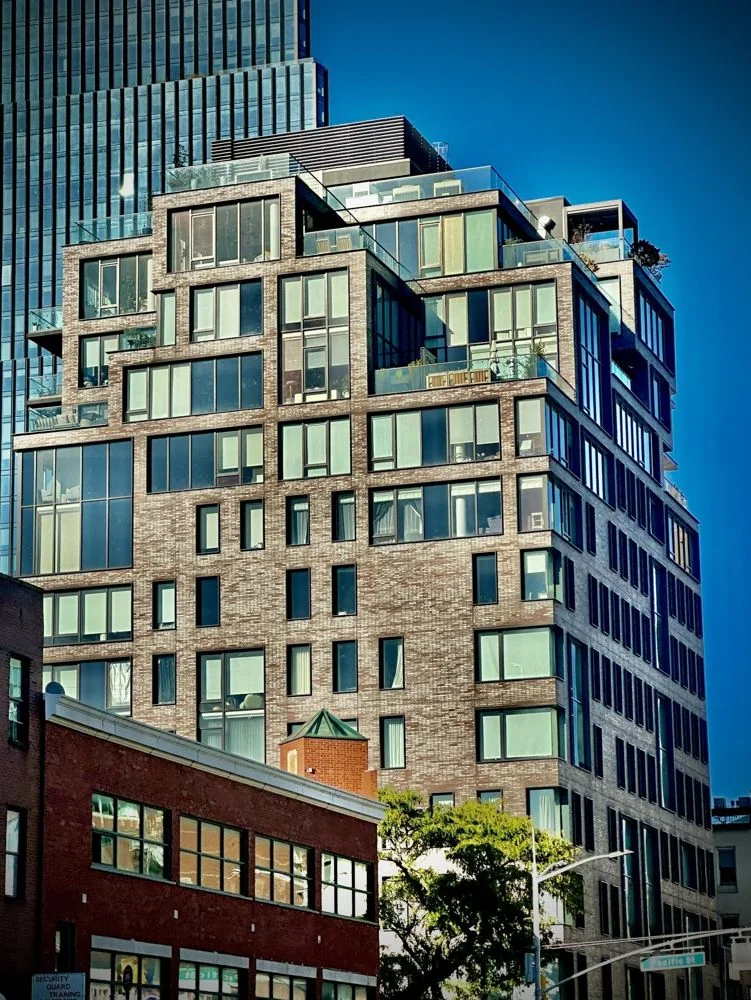
Even the median is getting in on it. This spring, an 11-foot sculpture called Hurly-Whirly landed on the Fourth Avenue median at Second Street, kitty-corner from J.J. Byrne Playground. Gowanus artist David Barthold based it on the whimsical roadside art he remembers from family road trips through the South and Midwest in the 1960s and ’70s, and its painted plywood wings spin on a steel post when the wind picks up. The arts group Why Not Art? led the project with Arts Gowanus, Forth on Fourth Ave and the city’s DOT Art program, and five teenagers in the Beam Center’s paid art production apprenticeship built and installed it. “It’s about, really, just spreading joy,” Barthold told the Brooklyn Paper. It’s on view through this fall, so catch it while you can.
That mix is what I love about Fourth Avenue now. You can live in a building with a rooftop lap pool and still grab your morning coffee at the corner deli under a turret that has watched the avenue change for generations.
Who’s Building Now
Walk the avenue today and you’ll see the same names again and again on construction fences. A few developers have done more than anyone to reshape Fourth Avenue:
- Avery Hall Investments is the most active builder since the Gowanus rezoning, with 655 Union at 204 Fourth Avenue (193 apartments, 50 affordable, with Gindi Capital) and 544 Carroll Street (133 apartments, 35 affordable, built with air rights bought from the MTA).
- Adam America and Slate Property Group led the 2014 to 2019 wave together, at 470, 535 and 275 Fourth Avenue, and Adam America built Five Six One Pacific on the site of the Church of the Redeemer.
- Quinlan Development Group and GTIS Partners opened Longview at 380 Fourth Avenue in 2025, with 197 apartments, 50 of them rent-stabilized.
- Totem (now Ailanthus), BEB Capital and SK Development, with the nonprofit Fifth Avenue Committee, are behind One Sunset at 737 Fourth Avenue, Sunset Park’s first big mixed-income rezoning.
- Heron Real Estate owns 164 Fourth Avenue, a 17-story tower with 30% of its 160 apartments set aside as affordable.
- Greystone Development restored the old Public Bath No. 7, now PureGym Park Slope, and built a 12-story tower beside it.
- Fifth Avenue Committee and Brooklyn Public Library opened the Sunset Park Library and Apartments in 2023, a new library with 49 fully affordable homes above it.
Smaller builders fill in the rest, from Brookland Capital at 554 Fourth Avenue to New Empire at Six Garfield and New Leaf Development at Lumina.
Buildings Worth a Closer Look
There are dozens of new buildings on the avenue now, from Atlantic Avenue down to the 60s, so I picked a handful I keep coming back to, listed north to south. A few are open and leasing, one is a condo just around the corner from me, and one was among the hardest-fought buildings in Brooklyn.
52 Fourth Avenue
Boerum Hill, at Dean Street
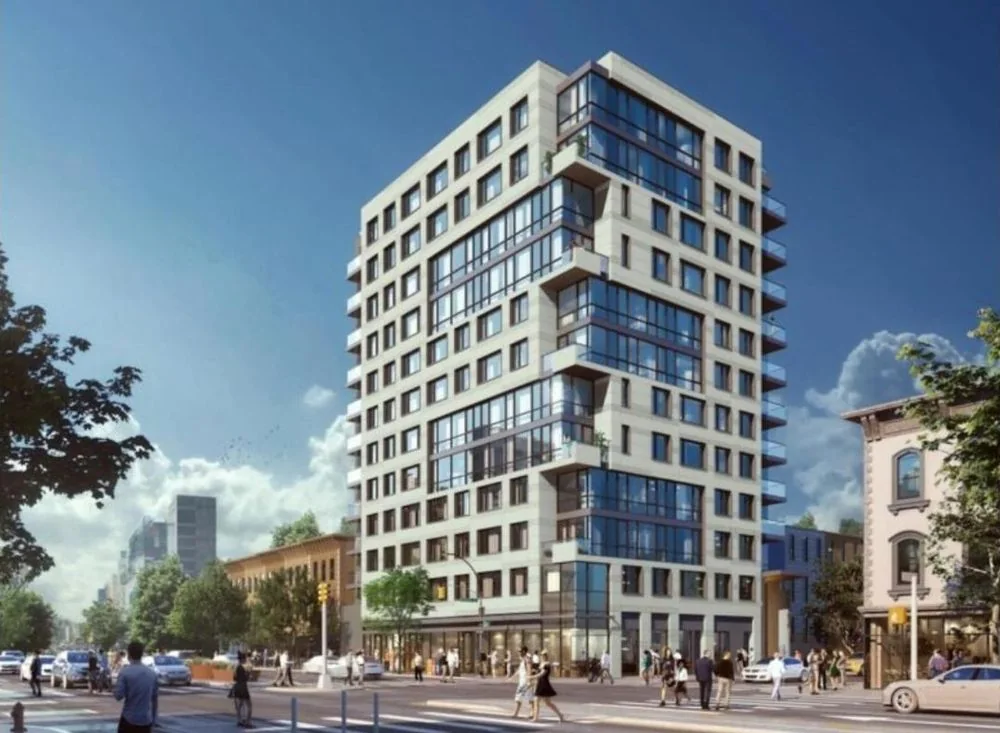
This nine-story, 52-apartment building is a good example of how the housing lottery works on Fourth Avenue. Nineteen of its apartments went to the city’s lottery last winter. One-bedrooms at 40% of area median income (AMI) rented for $869 a month, two-bedrooms at that level for $976, and one-bedrooms at 60% for $1,399. A few one-bedrooms were set aside at 130% of AMI for $3,253 to $3,674. Households earning from about $39,000 to $189,000 a year could qualify, depending on household size. Apartments come with washers and dryers, and the building has a gym, a rooftop terrace and a dog-washing station. That lottery closed on January 5, 2026, but new ones are posted on Housing Connect all the time.
How the NYC Housing Lottery Works
Most new buildings on Fourth Avenue set aside apartments for the city’s affordable housing lottery, priced for households at set percentages of area median income. You apply for free online, and a share of units in each building is often reserved for people who already live in the local community district.
- NYC Housing Connect, the city’s official site for browsing open lotteries and applying
- Find Affordable Housing, HPD’s guide to eligibility and the application process
- Housing Ambassadors, community groups that help you prepare and apply, free of charge
Never pay anyone to apply for a housing lottery. Applying through Housing Connect is always free.
655 Union
204 Fourth Avenue, Gowanus and Park Slope
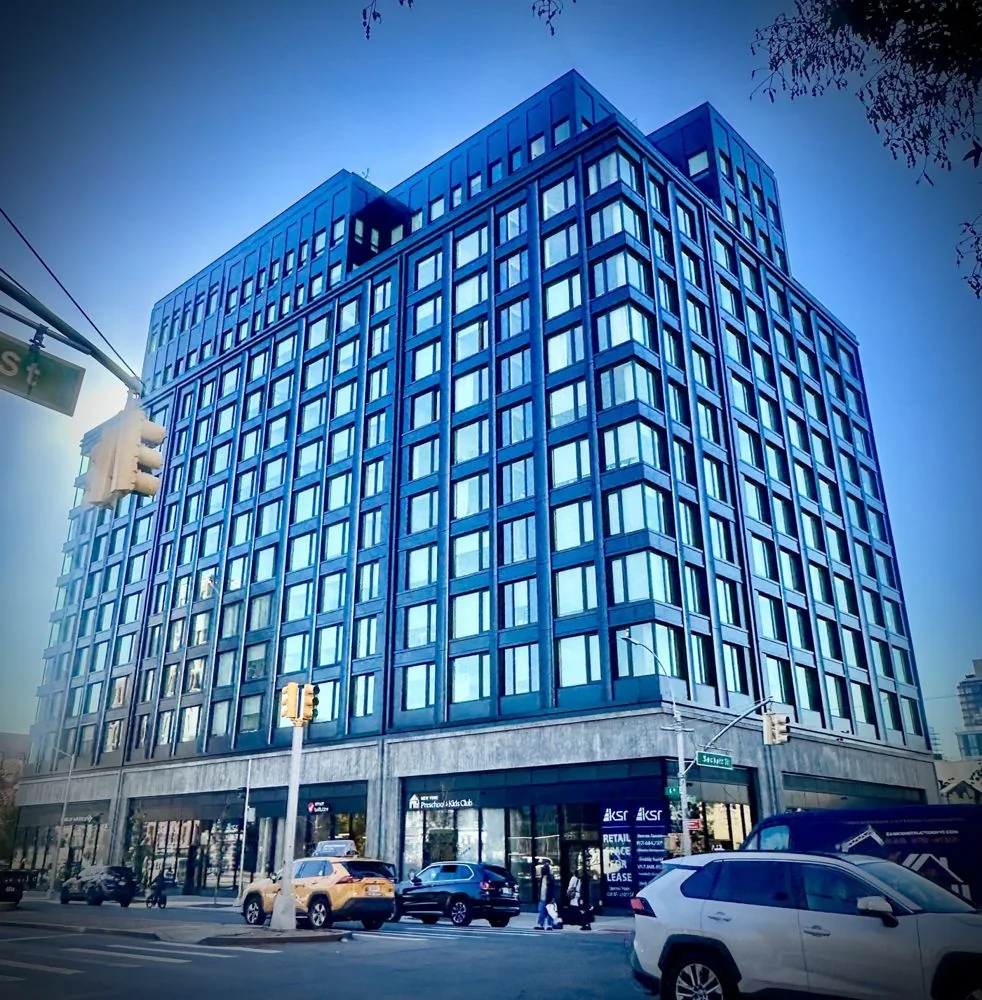
For years this half-acre corner was a Speedway gas station, best known for the Black Lives Matter murals painted across it. Avery Hall Investments and Gindi Capital bought it in 2019 for about $30 million, and today it’s 655 Union, a 193-apartment rental designed by L+Z Architecture that opened in 2025. I can confirm it’s open and leasing, and the amenities really are incredible.
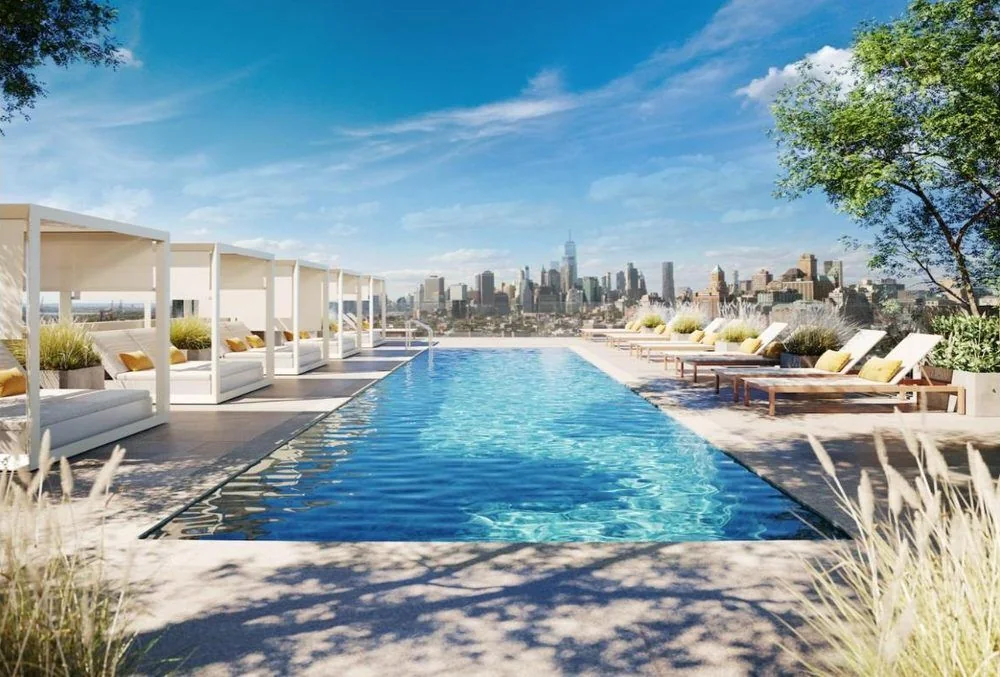
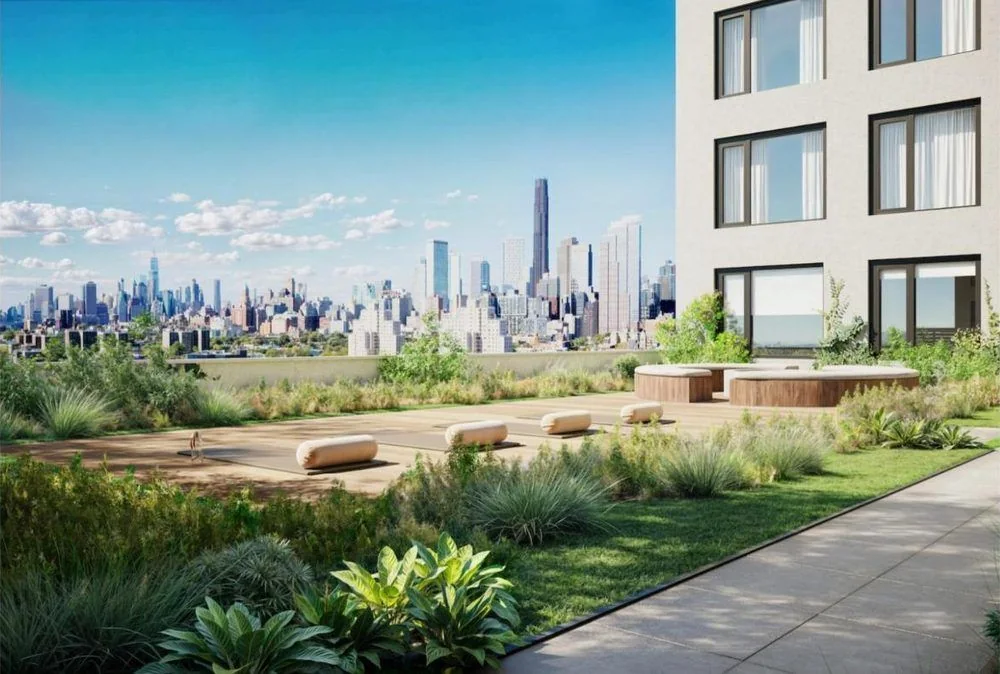
The facade is a grid of tall windows set in sculptural black metal panels over a double-height glass storefront base, with landscaped terraces on the upper setbacks. Inside there’s about 12,000 square feet of amenities. The standouts are a rooftop club with a 25-yard lap pool and cabanas looking out at the Manhattan skyline, the Sunset Garden, a landscaped second-floor terrace, and a dog spa, plus many more.
Apartments have Italian porcelain tile, marble counters, white oak floors and in-unit washers and dryers, and some come with wraparound terraces. Avery Hall partner Brian Ezra calls it “the only full amenity rental building on the border of Gowanus and Park Slope.” Fifty of the apartments are permanently affordable, rented through a 2024 lottery at 40% to 130% of AMI, with one-bedrooms starting at $888 a month. On the ground floor, NY Kids Club opened a 3,700-square-foot flagship, and Bank of America has a branch.
Six Garfield
269 Fourth Avenue at Garfield Place, Park Slope
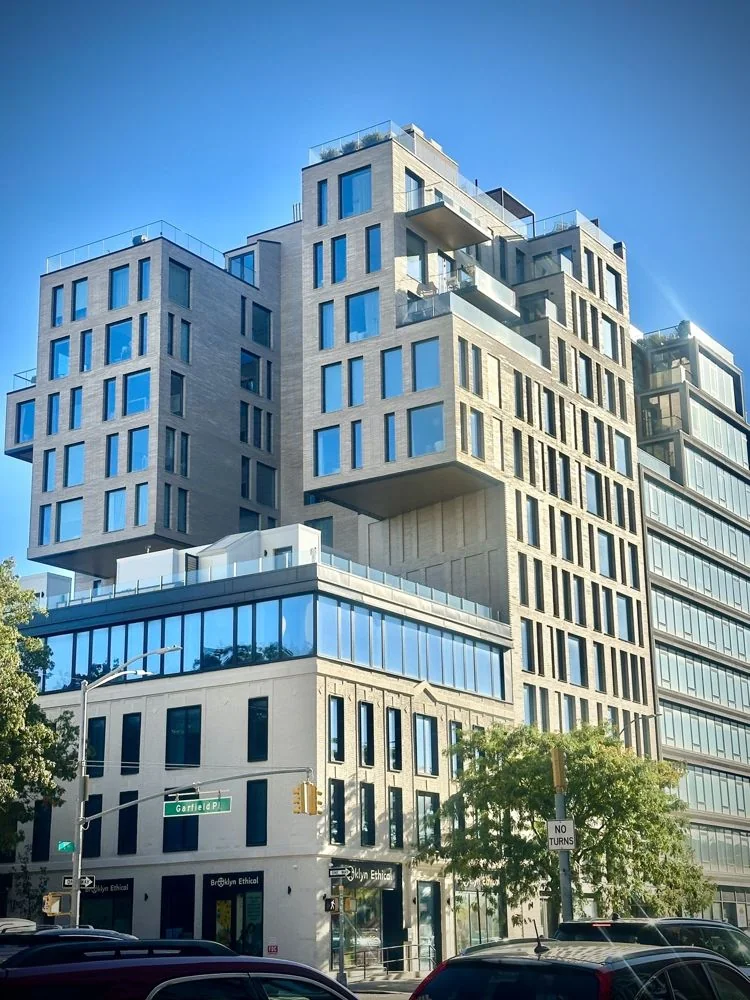
Six Garfield is one of the most interesting silhouettes on the avenue. DXA Studio kept the old corner building, reclad it in lime-washed masonry, and stacked a 12-story, 33-condo tower above it. Its upper floors are pushed out into cantilevered volumes that hang out over the street, each one capped with private terraces. It’s complete, and it shows how Fourth Avenue’s new buildings can play with their shape instead of just filling the zoning envelope.
544 Carroll
272 Fourth Avenue at Carroll Street, Gowanus
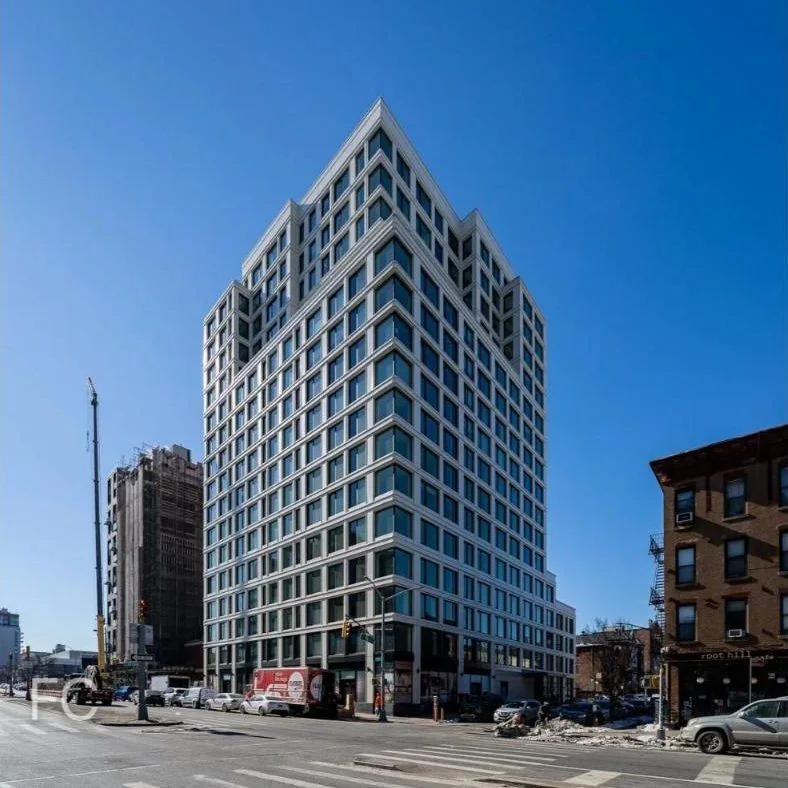
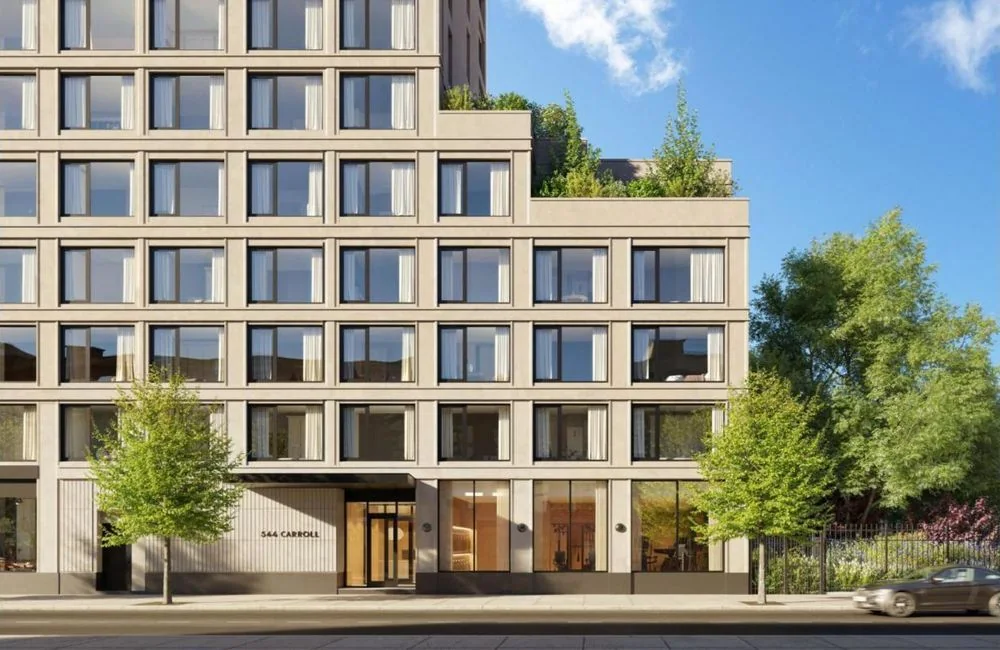
For me, 544 Carroll is the cleanest design on the avenue. Avery Hall designed it in-house, with L+Z Architecture as architect of record. The 17-story, 133-apartment tower has a light tan facade and a crisp grid of floor-to-ceiling windows. The windows tighten up on the top five floors, and the tower steps back into a crown of setbacks. At street level, a double-height base wrapped in dark metal holds the shops, including the Purple Crayon preschool.
The building also exists because of the 2021 Gowanus rezoning. Avery Hall paid $30 million for about 50,000 square feet of air rights from the MTA substation next door at 276 Fourth Avenue, a transfer that depended on the rezoning. Greenery is woven all the way through. There’s a planted courtyard off the lobby, landscaped terraces on the setbacks, and a rooftop sunset terrace and sundeck with grills and a prep kitchen. Avery Hall founding partner Jesse Wark says, “What sets our work apart is the ability to integrate design and development from the ground up.”
It’s also a strong affordable housing story. Thirty-five of the 133 apartments are permanently affordable under the city’s Inclusionary Housing program, and most of them are two-bedrooms, which are hard to find in any lottery. In the summer of 2025, all 35 were offered to the public through the city’s housing lottery at these rents:
- At 40% of AMI: five one-bedrooms at $946 and nine two-bedrooms at $1,123 a month
- At 60%: one one-bedroom at $1,476 and thirteen two-bedrooms at $1,758
- At 110%: one studio at $2,621 and six one-bedrooms at $2,800
Households earning from about $37,000 to $168,000 a year could apply, and 20% of the apartments were set aside for Community Board 6 residents. The lottery closed on September 1, 2025, so it’s no longer taking applications, but the apartments stay permanently affordable as they turn over. The building has been open and leasing since that summer.
Lumina
651 Fourth Avenue at 20th Street, South Slope
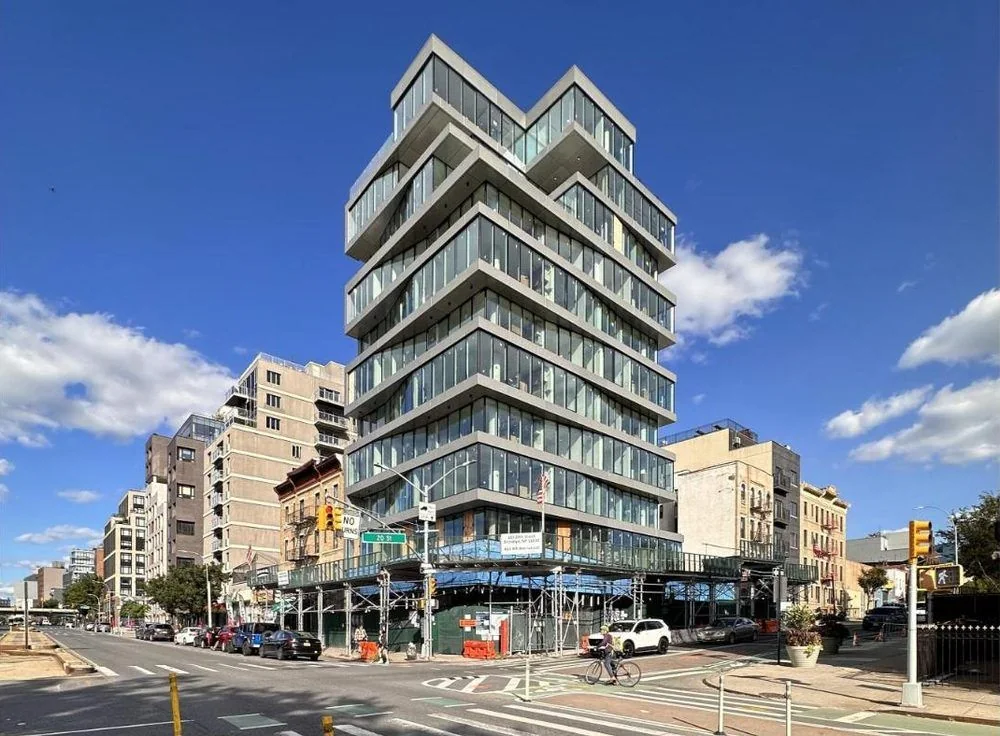
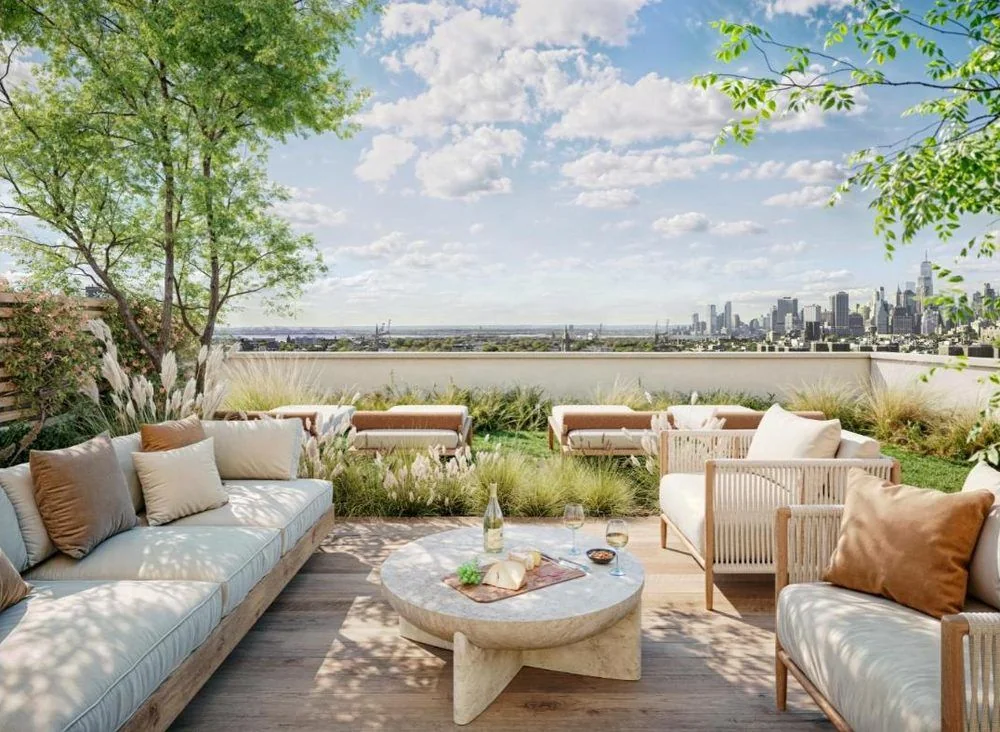
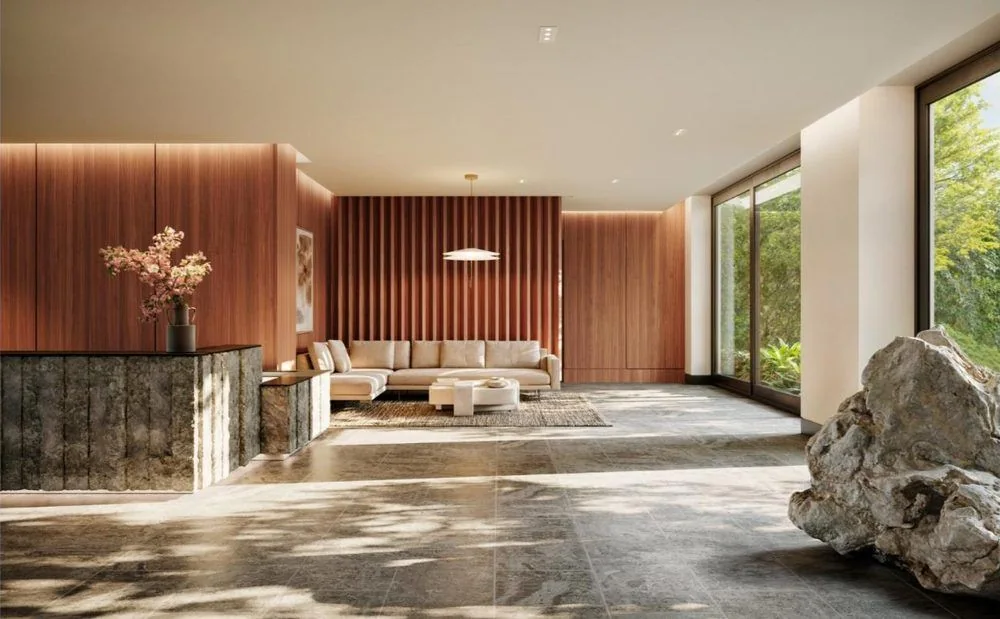
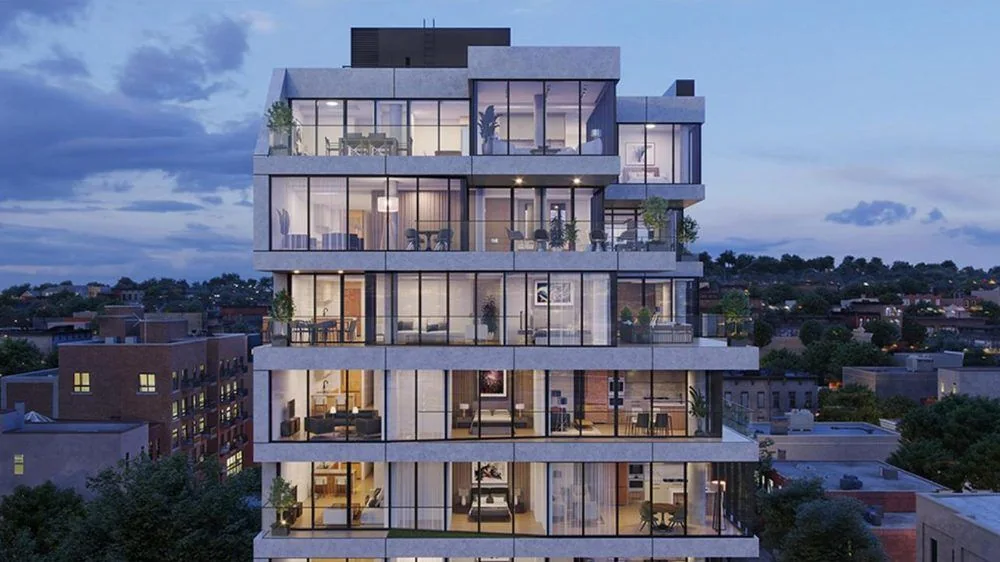
Lumina is close to where I live, and I love its clean design. It used to be a used-car lot and repair shop. Now it’s an 11-story, 26-residence condo by New Leaf Development, designed by Murat Mutlu of INOA Architecture, who worked at Zaha Hadid Architects and Skidmore, Owings & Merrill before starting his own firm. The building reads as a stack of cutout and cantilevered floors. The glass angles in and out from level to level, carving a private terrace for every home, and the terraces get bigger toward the top. CityRealty compared it to 520 West 28th Street, the Zaha Hadid condo on the High Line.
Mutlu hasn’t spoken publicly about Lumina itself, but he has explained the thinking behind buildings like it. “Advances in glazing technology have made larger expanses of glass more economical, while the market increasingly favors bright, open interiors,” he told CityRealty this summer. “Contemporary architectural expression is not driven by taste alone, but also by economics, technology, construction efficiency, and changing expectations about how people want to live or work.”
Lumina opened in 2025, with no more than three homes per floor. Sponsor units are listed from $875,000 for a one-bedroom to $1.75 million for a three-bedroom, and the R train at Prospect Avenue is two blocks away.
One Sunset
737 Fourth Avenue at 25th Street, Sunset Park
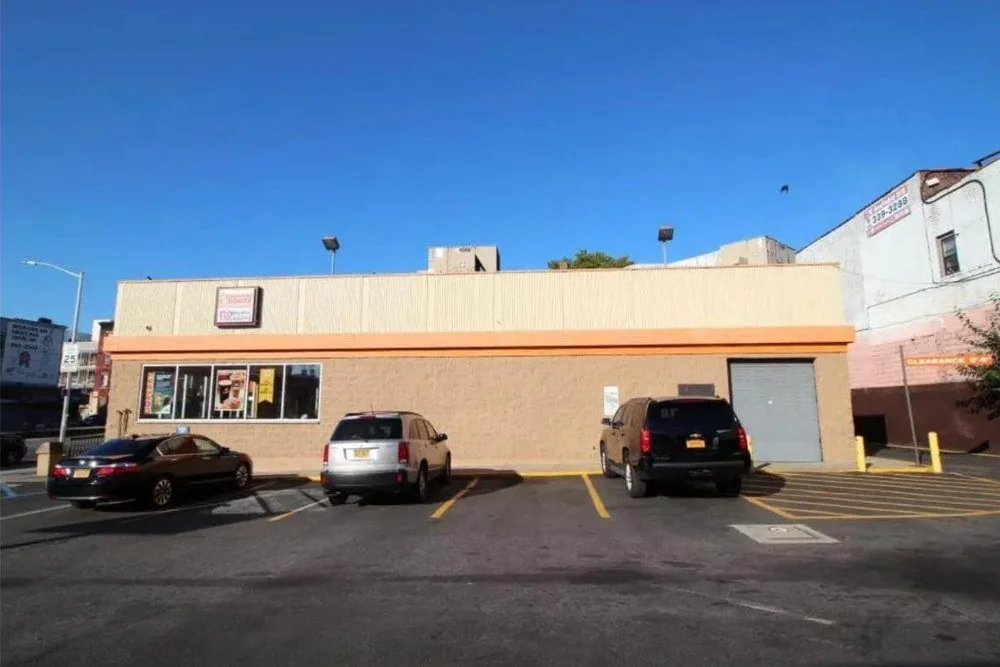
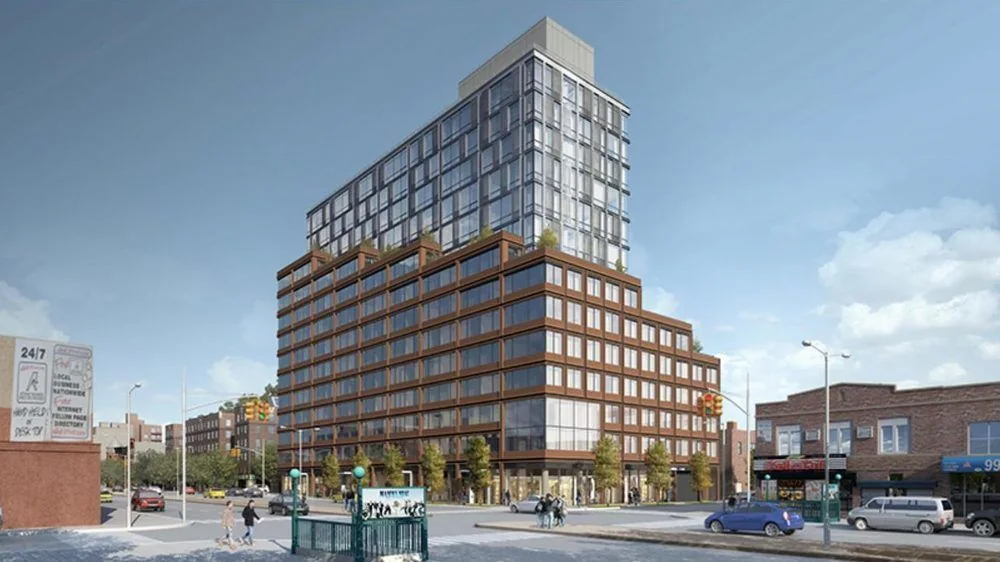
No building on this list was fought over harder. In 2019 the owners of a one-story Dunkin’ and Baskin-Robbins at 25th Street asked the city to rezone the lot from manufacturing to residential so they could build a 14-story mixed-income tower. That landed in the middle of Sunset Park’s biggest debate, over whether new market-rate housing protects working families or pushes them out. The neighborhood had just fought off the Industry City rezoning.
The opposition was loud. In November 2020, then-Assemblymember-elect Marcela Mitaynes led a rally against the plan. “We need affordable housing but this is not the project to give it to us,” she said. “We need 100 percent affordable housing in perpetuity.” The group Protect Sunset Park called it “inessential luxury housing,” and of the 38 people who testified at the Borough President’s hearing, 32 spoke against it. They worried about displacement, rents too high for local families, and the building’s height.
The project survived because it changed. Community Board 7 approved it 26 to 15 with conditions, and the developers signed a community benefits agreement with the nonprofit Fifth Avenue Committee and local groups. The agreement:
- deepened affordability to an average of about 46% of AMI, with no studios
- set a 35% local hiring target
- gave the MTA a free easement for an elevator at the 25th Street R station
- included a commitment never to convert the building into a homeless shelter
- reserved space for local businesses
Council Member Carlos Menchaca, who had opposed Industry City, came around. “This proposal is not perfect,” he said in March 2021. “It will not, for instance, build 100 percent affordable, which I believe we need to do here in the city of New York.” The City Council approved the rezoning unanimously in April 2021.
The developers, Totem (now Ailanthus), BEB Capital and SK Development, say it delivers exactly what Sunset Park lacks: more homes, and more of them affordable. Totem CEO Tucker Reed put it bluntly: “We’re not building luxury condos here. There are no condos, and to call it luxury is fairly disingenuous.” Michelle de la Uz of Fifth Avenue Committee said, “Sunset Park is in desperate need of more housing.” The finished building grew to 187 one-, two- and three-bedroom rentals, 46 of them permanently affordable at an average of about 48% of AMI. In the fall 2025 lottery, one-bedrooms started at $649 a month, and 20% of units were set aside for Community Board 7 residents. The building also has an indoor bike hub for 95 bikes, a new home for the Dunkin’, and an easement for an elevator at the subway entrance just south of its front door.
More from my Gowanus series: Spread Love, The Gowanus Way · Gowanus Open Studios, Thirty Years of Open Doors
Thinking About Fourth Avenue or Gowanus?
New construction means new options, from studios with skyline views to family-sized apartments with affordable set-asides, all a short walk from the R train. If you’re curious about living on Fourth Avenue, or want help comparing buildings, I’d love to walk the avenue with you.
Reach out to me at 347.286.5797, jason@gordonrealtypartners.com, or JasonMezydlo.com, and follow along on Instagram at @JasonMezydlo for more of my favorite corners of Brooklyn.
Building details, prices and lottery information come from developers, city agencies and published reports and can change. Housing lotteries listed here have closed; check NYC Housing Connect for open ones.
Sources
- It’s (Past) Time for Mandatory Inclusionary Housing in NYC, Brad Lander (February 2016)
- Community Boards Reflect on Their Votes For, and Against, Bloomberg Rezonings, City Limits (February 2017)
- Gowanus Becomes Brooklyn’s Biggest Development Story, Commercial Observer (January 2026)
Show all 86 sourcesShow fewer
- Fourth Avenue, Historic Districts Council, Six to Celebrate
- Past and Present: 4th Avenue Near 55th Street, Brownstoner (January 2014)
- Special Fourth Avenue Enhanced Commercial District, NYC Department of City Planning (2011)
- City Says It Will Be Guided by ‘Bridging Gowanus’ in Rezoning, City Limits (October 2016)
- Gentrilennials Strike Brooklyn’s Gritty Fourth Avenue, New York Post (November 2016)
- Fourth Avenue in Brooklyn, Spanning Park Slope and Gowanus, Is Transforming, amNewYork (August 2016)
- How Rezoning Can Change a Neighborhood from Industrial to Residential, The Cooperator (March 2017)
- After Community Benefits Deal, City Council Approves Controversial Gowanus Rezoning, Brownstoner (November 2021)
- Rising from the Sludge: City Releases Rezoning Plan for Huge Swath of Gowanus, Brooklyn Paper (June 2018)
- Park Slope Rezoning, NYC Department of City Planning (2003)
- South Park Slope Rezoning, NYC Department of City Planning (2005)
- Sunset Park Rezoning, NYC Department of City Planning (2009)
- The Fourth Avenue Subway in Brooklyn (1915), nycsubway.org, reprinting the Public Service Record
- BMT 4th Avenue Line, nycsubway.org
- Park Slope Rezoning Approved, Gotham Gazette (April 30, 2003)
- City Planning: Fourth Avenue a Missed Opportunity, Streetsblog (February 2008)
- Park Avenue Lessons for Brooklyn’s Fourth Avenue, Commercial Observer (June 2011)
- City Goes Fourth With New Slope Avenue Plan, Brooklyn Paper (2011)
- Special 4th Avenue District in Brooklyn Approved, CityLand (December 2011)
- WSJ on 4th Avenue, Brownstoner (June 2012)
- Canyon of Mediocrity, Habitat (February 2016)
- De Blasio Takes Victory Lap Through Park Slope, The Real Deal (March 2016)
- Fourth Avenue Undergoes Transformation, Brooklyn Eagle (September 2014)
- Locals, Officials Brainstorm Improvements for Gritty Fourth Avenue, DNAinfo (January 2014)
- Fourth Avenue Safety Results, Streetsblog
- Fourth Avenue Great Streets Project, NYC DOT press release (March 2017)
- Protected Bike Lanes Coming to Fourth Avenue, NYC DOT press release (August 2019)
- City Announces Completion of Two Brooklyn Protected Bike Lanes, CityLand (November 2020)
- Gowanus Neighborhood Plan, CPC Report, NYC City Planning Commission (September 2021)
- NYC Council Approves Gowanus Rezoning, City Limits (November 2021)
- Gowanus: Fourth Avenue Corridor, NYC Department of City Planning
- Public Bath No. 7 Designation Report, NYC Landmarks Preservation Commission (1984)
- 4th Avenue, Sunset Park, Forgotten New York (June 2025)
- Digital Collections, Brooklyn Public Library, Center for Brooklyn History
- Median Landscaping the Latest in Fourth Avenue Improvements, Medium (May 2024)
- Notes from June 1, 2022 FOFA/NYC DOT Meeting, Forth on Fourth Avenue
- Colorful, Kinetic Sculpture Enlivens 4th Avenue Median, Brownstoner, from the Brooklyn Paper (May 2026)
- Finally, Some Street Art Graces the Area, Red Hook Star-Revue (July 2026)
- Why Not Art?, Why Not Art?
- Public Bathhouse No. 7, Clio
- Brooklyn Lyceum Building to Hit Auction Block, The Real Deal (February 2013)
- New York Public Bath No. 7, Park Slope, Forgotten New York (November 2022)
- Blink Fitness Opens in Newly Restored Brooklyn Lyceum, Franchising.com (July 2017)
- Brooklyn Lyceum at 227 4th Avenue to Be Restored for Blink Fitness, New York YIMBY (July 2015)
- PureGym Makes $105M Bid for Blink Fitness, NJBIZ (September 2024)
- PureGym Selected as Winning Bidder for Blink Fitness, Mann Report (October 2024)
- PureGym Park Slope, 227 Fourth Avenue, PureGym
- Building of the Day: 4302 Fourth Avenue, Brownstoner
- Parlour, Architizer
- Renderings Revealed for Brooklyn Public Library Pacific Branch Renovations, New York YIMBY (September 2026)
- Costs of Rezoning, a Cautionary Tale, Brooklyn Ink (December 2016)
- Church of the Redeemer and 561 Pacific Street, Brownstoner (2019)
- St. Michael’s R. C. Church, 1913, Brooklyn Public Library, Center for Brooklyn History
- 40th St. & 4th Ave, 1905, Brooklyn Public Library, Center for Brooklyn History
- Pacific Branch, 1904, Brooklyn Public Library, Center for Brooklyn History
- Housing Lottery Launches for 52 Fourth Avenue, New York YIMBY (December 2025)
- NYC Housing Connect, NYC Department of Housing Preservation and Development
- Housing Ambassadors, NYC Department of Housing Preservation and Development
- New Renderings Revealed for 655 Union Street, New York YIMBY (December 2024)
- 655 Union Street, Gowanus, Brooklyn Paper
- Housing Lottery Launches for 655 Union Street, New York YIMBY (October 2024)
- Avery Hall Pays $30M for Gowanus Site, The Real Deal (November 2019)
- NY Kids Club Lease at 655 Union Street, Commercial Observer (March 2025)
- 655 Union Financing, citybiz (March 2026)
- Six Garfield Nears Completion, New York YIMBY (June 2023)
- 544 Carroll Street Tops Out, New York YIMBY (August 2024)
- 544 Carroll Street Lottery Listing, NYC Housing Connect
- Gowanus Luxury Rental Launches Leasing, 6sqft (July 2025)
- Housing Lottery Launches for 544 Carroll Street, New York YIMBY (July 2025)
- Avery Hall Buys MTA Air Rights at 276 4th Avenue, Brownstoner
- Purple Crayon Preschool at 544 Carroll, Commercial Observer (December 2025)
- Construction Update, 544 Carroll Street, Field Condition (February 2026)
- 651 4th Avenue Nears Completion, New York YIMBY (September 2024)
- Interview: Murat Mutlu of INOA Architecture, CityRealty (August 2026)
- Lumina, 179 20th Street, StreetEasy
- Mitaynes Leads Rally Opposing Mixed-Income Development, PoliticsNY (November 2020)
- Mixed Housing Development Approved by Community Board 7, Brooklyn Eagle (November 2020)
- Menchaca Backs 737 Fourth Avenue, Brownstoner (March 2021)
- Menchaca Officially Approves Housing Development, Brooklyn Eagle (March 2021)
- City Council Unanimously Approves 737 Fourth Ave, Brooklyn Eagle (April 2021)
- 737 Fourth Avenue CPC Report, NYC City Planning Commission (February 2021)
- Housing Lottery Launches for One Sunset, New York YIMBY (October 2025)
- Brooklyn Mixed-Use Development Nears Completion, Mann Report (September 2024)
About Jason Mezydlo
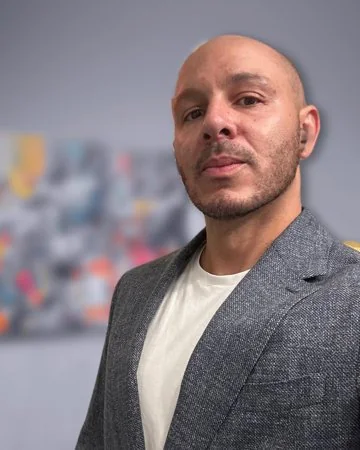
Jason Mezydlo is Managing Sales Partner at Gordon Realty Partners and has worked in New York City real estate since 2012. A graduate of the Harrington College of Design with a BFA in interior design, he brings a designer’s eye to every search, helping clients see what a space can become before they sign. Jason began his career in commercial leasing, guiding small business owners through site selection, lease negotiation and space planning, before moving into Manhattan’s luxury rental market and home sales across Manhattan and Brooklyn. A longtime Brooklyn resident, he pairs market expertise with a deep love for the city’s history, art and architecture.
347.286.5797 · jason@gordonrealtypartners.com · JasonMezydlo.com · @JasonMezydlo
Gordon Realty Partners · 622 3rd Avenue, New York, NY · NYS Licensed Real Estate Salesperson