New York City Rental Guide · Your Questions, Answered
The House That Pays You Back
Two, three, four, six units, a storefront on the ground floor. How to tell when a Brooklyn multifamily is a smart buy, what it really costs to live in one, and where I’d be looking right now.
By Jason Mezydlo · @JasonMezydlo
Jason Mezydlo · Managing Sales Partner, Gordon Realty Partners
347.286.5797 · jason@gordonrealtypartners.com · JasonMezydlo.com
622 3rd Avenue, New York, NY

Three Neighborhoods, One Big Question
This past summer I spent my weekends crisscrossing Brooklyn with a young couple who had a simple, beautiful plan. They wanted to live in the biggest apartment in a small building, rent out the others, and let their tenants carry a healthy share of the mortgage. They had their savings in hand and one firm rule: after the rent came in, owning the building had to fit comfortably within a monthly number they’d set for themselves.
We started in Flatbush, East Flatbush and Flatlands, where gut-renovated three-families and vacant buildings ready for hand-picked tenants penciled out with room to spare, several of them a short walk from where the proposed Interborough Express is planned to stop. Then we turned west to Bay Ridge and Sunset Park, with their limestone fronts, tree-lined blocks and that unmistakable small-town calm, and found that the charm comes at a premium. Bay Ridge two-families, beautiful as they were, ran over their number every time, while a Flatbush Avenue building with two apartments over a storefront cleared it easily. One Bay Ridge listing advertised as a three-family turned out, in every city record, to be a legal two-family. A tempting Sunset Park six-family came with back taxes and open violations.
Every showing came back to the same question, the one I hear more than any other from buyers looking at two-, three- and four-family homes: is this actually a good investment? The honest answer is that it depends on the building, the block and the buyer. But after a summer of spreadsheets, offer sheets and Saturday showings, I can tell you exactly how to find out. So let’s break it down.
Why Live Above Your Investment
A small multifamily is the rare Brooklyn purchase that pays you back while you live in it. Buy a single-family house or a condo and every dollar of the mortgage, taxes and insurance comes out of your pocket. Buy a three-family and your tenants can cover half of that bill or more, while you build equity in the whole building, not just the part you sleep in.
- Rent offsets your mortgage. In my snapshots, rent from the other units covers roughly a third of the monthly carrying cost on a two-family and more than half on a three-family.
- You build equity on every unit. Each mortgage payment pays down a loan on the entire building, and appreciation lands on the entire building too.
- Owner-occupant financing is generous. Because you live there, lenders treat two- to four-unit homes as residential. Since late 2023, Fannie Mae has allowed as little as 5% down on owner-occupied two- to four-unit homes, and in Brooklyn the 2026 conforming limits run up to $1,599,375 for a two-family, $1,933,200 for a three-family and $2,402,625 for a four-family.
- The tax code rewards landlords. The rented share of the building can be depreciated, and expenses tied to it are deductible.
- Flexibility for the long run. Today’s rental can become a home for a parent, a grown child or a studio, and the whole building can become a pure income property when you move on.
There is a tradeoff, and I’ll be straight about it: you become a landlord, and a small building asks for your time and attention. But for the right buyer, few paths in New York build wealth this steadily.
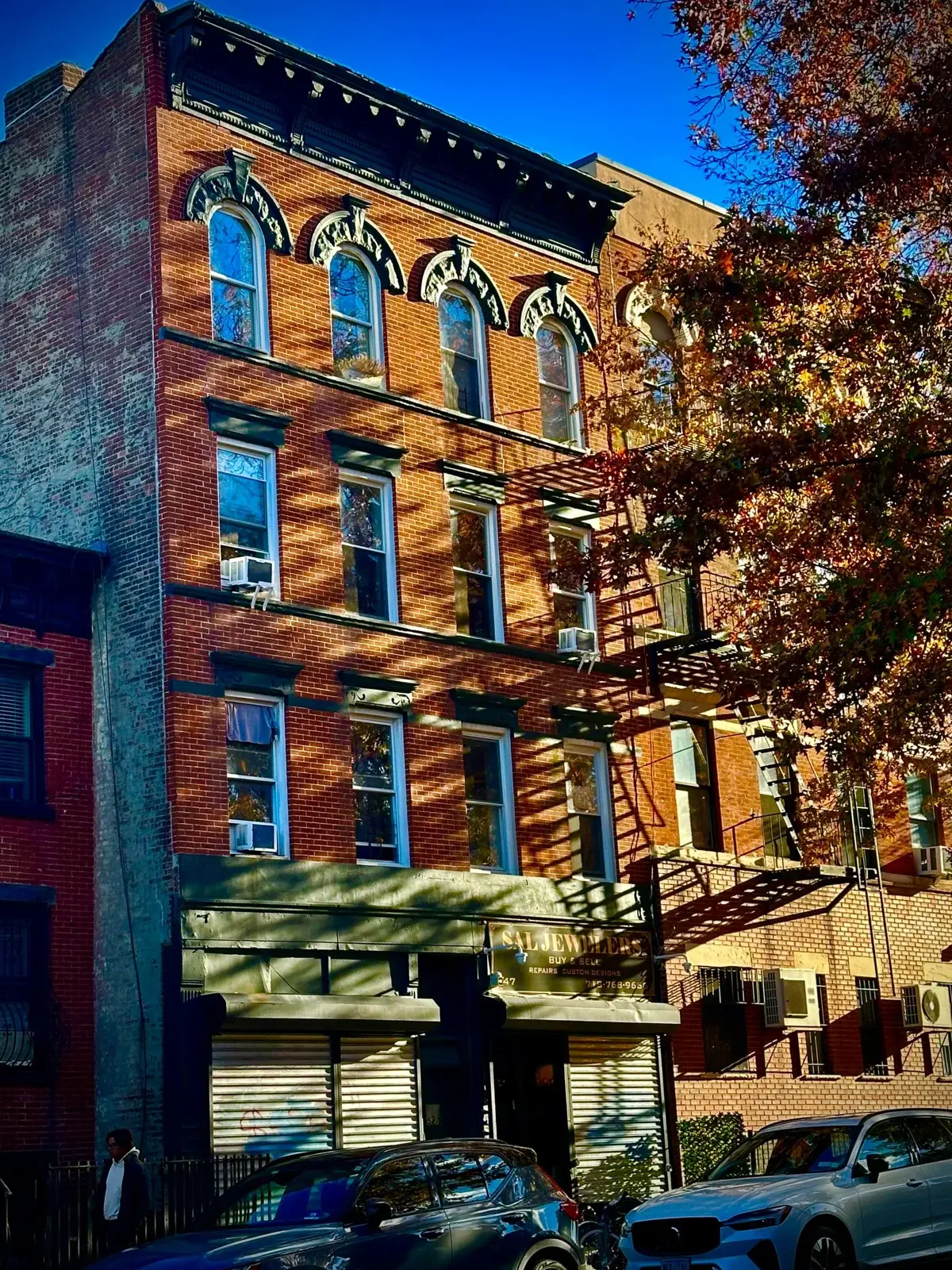
Two, Three, Four, Five and More
The number of units changes everything: how you finance the building, how it’s taxed, which rent rules apply and how much of your mortgage the tenants can carry. Here’s how each size works in Brooklyn.
Brooklyn Multifamily, Size by Size
Two-family
Financing Owner-occupant mortgage, as little as 5% down
Property tax Class 1, the city’s most favorable assessment rules
Rent rules Free market; owner-occupied buildings of 10 or fewer units are exempt from Good Cause Eviction
Best for First-time buyers who want one tenant and a lot of house
Three-family
Financing Owner-occupant mortgage, as little as 5% down
Property tax Class 1
Rent rules Free market, with the same owner-occupied exemption
Best for The sweet spot, two rents against one mortgage
Four-family
Financing Owner-occupant mortgage, as little as 5% down; the last size that qualifies
Property tax Class 2a, with higher rates and slightly looser caps
Rent rules Free market, with the same owner-occupied exemption
Best for Buyers ready to run a true small building
Five-family
Financing Usually commercial or portfolio loans, often 25% to 35% down
Property tax Class 2a
Rent rules Free market, the last size before stabilization
Best for Investors who want scale without the six-unit rules
Six or more
Financing Commercial or multifamily loans
Property tax Class 2a, 2b or 2, depending on size
Rent rules Built before 1974, most apartments are rent-stabilized
Best for Experienced investors buying for long-term income
Two things jump out of a summer spent comparing them. First, the third unit is where the math tips in your favor. On a two-family you’re carrying the mortgage with one rent; on a three-family, two rents do the heavy lifting. Second, four units is the ceiling for owner-occupant financing. Step up to five and you’re in commercial lending, and at six you cross into rent stabilization, a different business entirely.
Whatever the size, the legal unit count on the Certificate of Occupancy is the only one that counts. Listings advertise basement apartments and “three-families” all the time that city records show as something less. Before you fall in love, I pull the C of O, the Department of Finance building class and the DOB record, because one unit can be the difference between a building that works and one that doesn’t.
Rent Stabilization, and the Six-Unit Line
In New York City, rent stabilization generally covers apartments in buildings of six or more units built before 1974, along with apartments in some newer buildings that took certain tax benefits. Two- to five-family homes are almost always free market, which is a big part of their appeal for owner-occupants.
In a stabilized apartment, rent increases are set each year by the city’s Rent Guidelines Board. In June 2026 the board voted 7–1 to freeze rents on both one- and two-year leases beginning between October 1, 2026 and September 30, 2027, the first time it has ever frozen two-year leases. The 2019 Housing Stability and Tenant Protection Act also ended the old paths that let apartments leave stabilization, and it sharply limited how much owners can raise rents after renovating an apartment or the building.
That’s why stabilized buildings trade at a deep discount. In the second quarter of 2026, GREA, a New York investment sales brokerage that publishes quarterly market reports, reported that Brooklyn’s free-market buildings sold for an average of about $510,653 per unit, while buildings with 75% or more stabilized units averaged about $146,000. For a patient buyer with the right financing, that discount can be an opportunity: stabilized tenants tend to stay for years, vacancy is low, and the price per unit is a fraction of free market. But it’s a long-hold income play, not a home with a rental attached, and it rewards careful underwriting of every rent roll and every expense.
- Check each apartment, not just the building. Unit count alone doesn’t settle it. I pull rent histories from New York State Homes and Community Renewal on every building with six or more units, and on any smaller building that ever received a tax benefit.
- Free market still has rules. Good Cause Eviction applies to many unregulated apartments, though buildings of 10 or fewer units where the owner lives are exempt, as are owners of 10 or fewer units statewide. Rules like these evolve, so I always walk my clients through what applies to their building before they sign.
When the Ground Floor Is a Storefront
Some of the strongest numbers I saw all summer came from buildings with a shop downstairs. A Flatbush Avenue building with two apartments over a storefront was the clear standout of our search, and the reason is simple: commercial rent isn’t regulated, and a good retail tenant can carry a big share of the building on its own.
- The store is its own business. Commercial leases are negotiated freely, often run five to ten years, and commonly pass along increases in property taxes and the tenant’s own utilities.
- Brooklyn has no commercial rent tax. That tax applies only in Manhattan below 96th Street, so a Brooklyn shopkeeper’s rent goes further, and so does yours.
- The zoning matters. A commercial overlay on the zoning map lets the store operate as of right. A store that predates its zoning is a grandfathered use, which can limit how you change or expand it later. I check the zoning on every mixed-use building we tour.
- Financing works differently. When the commercial space is modest, some residential loan programs still apply. Larger storefronts usually mean a commercial loan with a bigger down payment and a shorter term.
- Vacancy is the main risk. An empty apartment rents in weeks; an empty storefront can take months, so I always build a cushion for it into the numbers.
The market is paying attention. Matthews, a national investment real estate brokerage that tracks sales across the borough, counted 211 Brooklyn mixed-use sales worth $856 million in the first half of 2026, with neighborhood retail trading around a 6% cap rate. For an owner-occupant, there’s something more personal too. Renting your ground floor to a local baker, maker or gallery is one of the best ways to keep a block lively, and it makes you part of what keeps New York special.

The True Cost of Living in Your Investment
The listing shows you a price and a tax bill. Living in a small building costs more than that, and knowing the full picture is what separates a happy owner from a stressed one. Here’s what I have every client budget for.
What to Budget For
| Mortgage and property tax | Your largest line. Class 1 two- and three-families enjoy the city’s most favorable assessment rules. |
|---|---|
| Insurance | A landlord policy covering the whole building, often a few thousand dollars a year, more with a storefront. |
| Water and sewer | Billed to the building, not each apartment, so the owner usually pays. |
| Heat and hot water | With one boiler, you heat every apartment. From October 1 through May 31, the city requires 68°F by day when it’s below 55°F outside, and 62°F at night. |
| Repairs and reserves | Many investors set aside 1% to 1.5% of the building’s value each year for roofs, boilers and turnovers. |
| Vacancy | A few weeks between tenants is normal; plan on 5% to 8% of rent. |
| Compliance | Annual HPD registration for buildings of three or more units, periodic gas piping inspections for most buildings larger than a two-family, and lead paint rules in older buildings where young children live. |
| Your time | You’re the landlord and, often, the super. Some owners hire a manager for roughly 8% to 10% of rent. |
The real number to watch is your net monthly cost: everything above, minus the rent you collect. Compare it with what you’d pay to rent a similar apartment, then remember that a meaningful share of every mortgage payment is building your own equity, not someone else’s. That’s the lens I use with every client, and it’s the one in my snapshots below.
Snapshots, What the Numbers Can Look Like
Two numbers tell you most of what you need. The cap rate is a building’s yearly income after operating costs, divided by its price, before any mortgage. It lets you compare buildings on equal footing. Return on investment adds in your financing, the equity you build and appreciation, measured against the cash you actually put in.
The boxes below are illustrations, not listings: rounded, typical buildings for each neighborhood, with a mortgage near today’s rates of about 7%, 20% down for owner-occupants, and modest 3% yearly appreciation. Your real numbers will depend on the building, the rents and your loan, which is exactly what I run for clients before we make an offer.
Snapshot One · Bay Ridge
The Limestone Two-Family
About $1.4 million
- You live in
- The owner’s duplex
- You rent
- One large apartment
- Rent covers
- About a third of the monthly carrying cost
Snapshot Two · Sunset Park
The Brick Three-Family
About $1.5 million
- You live in
- The largest floor-through
- You rent
- Two apartments
- Rent covers
- More than half of the monthly carrying cost
Snapshot Three · Flatbush
The Three-Family Near the Proposed IBX
About $1.35 million
- You live in
- The largest floor-through
- You rent
- Two apartments
- Rent covers
- More than half of the monthly carrying cost
Snapshot Four · Mixed-Use
Three Apartments Over a Store
About $1.85 million
- You live in
- One apartment
- You rent
- Two apartments and the storefront
- Rent covers
- Nearly three quarters of the monthly carrying cost
Snapshot Five · Investor
The Six-Unit Walk‑Up, Mostly Stabilized
About $1.65 million
- You live in
- Investor purchase, 30% down
- You rent
- All six apartments
- Rent covers
- Nearly all of the monthly carrying cost
All figures are rounded estimates. Year-one return includes rent, principal paid down and 3% appreciation, measured against the down payment and closing costs. Equity built is the principal paid down each month in year one.
A few patterns stand out. Every added rent pushes the building closer to paying for itself, which is why three-families and mixed-use buildings shine. Bay Ridge asks you to pay for its charm and stability with a lower cap rate, a trade many owners happily make for the neighborhood itself. At today’s rates, most small buildings won’t fully cover their own costs in year one, and that’s normal: your return comes from rent, equity and appreciation together, and it grows every year as rents rise and the loan shrinks. Brooklyn’s broader market agrees that value is there. GREA put the borough’s blended multifamily cap rate at about 7% in the first half of 2026, with average pricing per square foot the lowest it has been since 2015.
The Mansion Tax and Closing Costs
New York’s so-called mansion tax is a one-time tax the buyer pays at closing on residential purchases of $1 million or more. It applies to one-, two- and three-family homes, condos and co-ops, and it’s charged on the entire price, not just the amount over $1 million. Most two- and three-families in Brooklyn’s best value neighborhoods fall in the first bracket.
The Mansion Tax, Paid by the Buyer
| Purchase price | Tax on the full price |
|---|---|
| Under $1 million | None |
| $1 million to just under $2 million | 1% |
| $2 million to just under $3 million | 1.25% |
| $3 million to just under $5 million | 1.5% |
| $5 million and up | 2.25% and higher |
Because the mansion tax applies to one- to three-family homes, buildings of four or more units, and many mixed-use buildings, are often outside it or taxed only on their residential share. That’s one more reason to look closely at the line between three and four units.
The other big closing cost for financed buyers is the mortgage recording tax. On a one- to three-family home with a loan of $500,000 or more, the buyer typically pays about 1.925% of the loan. Commercial properties and buildings of four or more units pay a higher rate, generally 2.8%. Add title insurance, your attorney, the bank’s fees and a few smaller items, and buyers should plan on closing costs of roughly 4% to 6% of the price on a typical Brooklyn two- or three-family. Sellers, for their part, pay the city and state transfer taxes.
There are smart ways to soften the hit. A purchase CEMA, when the seller’s lender will cooperate, lets you take over the seller’s existing loan balance so recording tax is due only on the new money. And pricing just under a threshold, $999,000 rather than $1,000,000, can save a buyer a full percent. These are the details I negotiate for my clients before we ever sign a contract.
Tax Breaks, Upfront and Down the Line
This is where small multifamily quietly outshines almost every other purchase. A building you live in and rent out sits at the crossroads of homeowner benefits and landlord benefits, and you can use both. I’m not a tax advisor, so always confirm the details with your accountant, but here’s the landscape.
On Your Property Tax Bill
- Assessment caps. Class 1 homes, the city’s one- to three-families, can’t see their assessed value rise more than 6% in a year or 20% over five years. Class 2a buildings, four to six units, are capped at 8% and 30%. In a rising market, that’s a powerful brake on your largest fixed cost.
- STAR. If the building is your primary residence, New York’s Basic STAR credit is available to households earning up to $500,000, with an enhanced benefit for qualifying owners 65 and older.
- Solar abatement. New York City’s solar property tax abatement now returns up to 30% of eligible solar and battery costs, spread over four years, for systems placed in service through the start of 2035. On a flat Brooklyn roof, it can be a terrific deal.
- J-51. The renovation abatement was renewed through 2036, though it’s aimed mostly at co-ops, condos and affordable rentals, so it rarely fits a typical small free-market building.
On Your Income Taxes
- Depreciation. The rented share of the building can generally be depreciated over 27.5 years, and storefronts over 39 years, a paper expense that can shelter much of your rental income.
- Bonus depreciation is back. The 2025 federal tax law permanently restored 100% bonus depreciation for qualifying property placed in service after January 19, 2025. Paired with a cost segregation study, it can front-load deductions on things like appliances, fixtures and site improvements.
- Deductible expenses. Repairs, insurance, utilities you pay and the rental share of mortgage interest and property tax all offset rental income.
- The 20% pass-through deduction on qualified business income was also made permanent, which can help owners who hold rentals through an LLC.
When You Sell
- Your home and your investment are treated differently. The part you live in can qualify for the home-sale exclusion of up to $250,000 of gain, or $500,000 for married couples. The rental portion can be rolled into another investment property through a 1031 exchange, deferring the tax on that gain.
- Opportunity Zones were made permanent in the same 2025 law, with new zones to be designated starting in 2027. Parts of Sunset Park sit in current zones, worth a look for investors with capital gains to reinvest.
One more note: the federal homeowner energy credits for heat pumps and solar ended after 2025, but New York State and Con Edison still offer incentives for efficiency upgrades, and they pair beautifully with the solar abatement.
Keeping Operating Costs Down
The best owners I know treat their building like a well-designed home: every system working with the others, nothing wasted. A few habits make a real difference year after year.
- Separate the meters. When each apartment has its own electric and gas meter, tenants pay their own bills and you aren’t heating the whole building with one boiler. It’s one of the most worthwhile upgrades a small building can make.
- Upgrade the envelope before the equipment. Air sealing, insulation and good windows shrink every heating bill, and they make a smaller, cheaper heat pump or boiler possible when it’s time to replace.
- Put the roof to work. Solar on a flat Brooklyn roof, paired with the city’s abatement, can trim the owner’s electric bill and the tax bill at the same time.
- Save water. Water and sewer are billed to the building, so low-flow fixtures and fixing leaks quickly put money straight back in your pocket.
- Keep good tenants. Turnover is the most expensive thing that happens to a small building. Fair renewals, quick repairs and a little kindness keep great tenants for years.
- Shop your insurance and check your assessment every year. Premiums vary widely between carriers, and if your Notice of Property Value looks high, you can challenge it with the NYC Tax Commission each spring.
- Build a bench. A plumber, an electrician and a handyman you trust, with preventive maintenance on the boiler and roof, beat emergency calls every time.
- Stay ahead of compliance. Registrations, gas inspections and heat season rules are easy to meet on a calendar and expensive to fix with a violation. I’m happy to share the checklist I give my clients.
Where I’d Be Looking Right Now
Brooklyn’s value lives south and east of Prospect Park. In the first quarter of 2026, IPRG, a New York investment property brokerage, tracked Southwest Brooklyn sales, including Bay Ridge and Sunset Park, at about $443 per square foot, and Central and East Brooklyn, including Flatbush, East Flatbush and Kensington, at about $352, against roughly $919 in Brownstone Brooklyn. That gap is the opportunity.
Sunset Park. Fourth Avenue and the side streets climbing toward the park are full of brick three-families a short walk from the waterfront, Industry City and the R train at 45th, 53rd and 59th Streets, with the N express at 59th. It’s also where the Interborough Express begins, at the Brooklyn Army Terminal. Three-families here offer some of the best balance of price, rent and character in the borough.
Bay Ridge. Limestone and brick two-families, a beloved commercial strip on Third and Fifth Avenues, and the calm of a neighborhood people rarely leave. Cap rates run lower, so this is a buy for the long haul and the quality of life. Mixed-use buildings on the avenues can bring the numbers back into balance.
Flatbush and Ditmas Park. Grand Victorians on one block and solid three-families on the next, with Brooklyn College and the Junction anchoring the south. The proposed IBX station at Flatbush and Nostrand Avenues would connect to the 2 and 5 trains, a major new crossroads for the neighborhood.
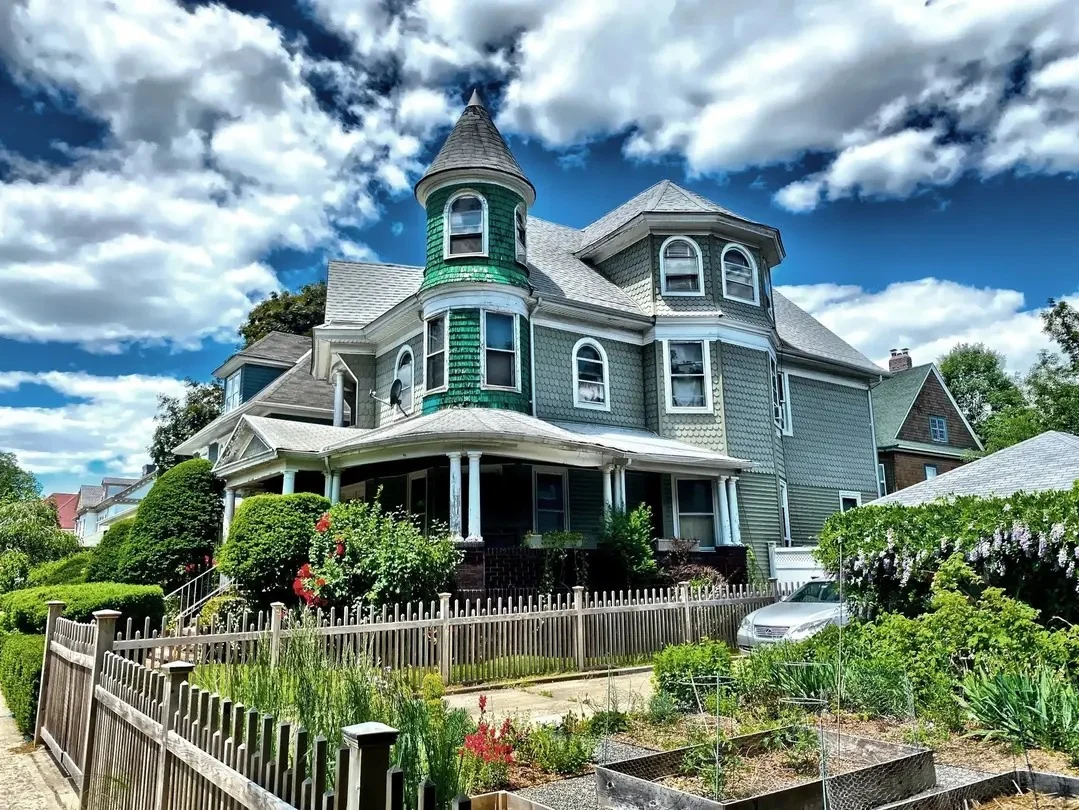
East Flatbush and Flatlands. Brick two- and three-families with driveways and backyards, at prices that still pencil out, near the proposed Utica Avenue, Remsen Avenue and Linden Boulevard stops. This is where the numbers worked best in our search this summer.
Kensington. Quiet blocks between Prospect Park and Ocean Parkway, and now the focus of the city’s South of Prospect neighborhood plan, which is studying new housing along the McDonald and Coney Island Avenue corridors.
The IBX Factor
The Interborough Express is a planned 14-mile light rail line from the Brooklyn Army Terminal to Jackson Heights, with its draft environmental review expected by the end of 2026 and officials pointing to the 2030s for service. I’ve written about it in depth in All Aboard the IBX, and it’s one of the most important real estate stories in the city. When I reached out to the city for my IBX coverage, the NYC Department of City Planning shared comments with me on background, and they speak directly to buyers in these neighborhoods.
“In the years ahead, the IBX will provide an exciting opportunity to bring together neighborhoods that have never had easy access to one another, and to leverage these new stations to bring holistic planning for homes, jobs, and infrastructure investments along this new transit corridor.”
NYC Department of City Planning, on background
The department added that it is pursuing neighborhood initiatives like the South of Prospect Plan.
“Its boundaries were designed to include one of the proposed IBX stops, so the area can have forward-looking transit-oriented zoning by the time the new stations are online.”
NYC Department of City Planning, on background
No one can promise what a future train will do to any one block, and station plans can still change. But transit, rezoning and new investment arriving together is exactly what I watch for. When researchers studied the Second Avenue Subway, they found condo and co-op prices along the new line rose about 8% relative to the rest of the Upper East Side. The time to start paying attention is now, while the plans are still taking shape.
Is a Brooklyn Multifamily Right for You?
If you want a home that helps pay for itself, a building that grows your wealth every month you live in it, and a stake in neighborhoods with real momentum, a Brooklyn two-, three- or four-family may be the smartest move you make. It asks a little time, a little patience and a willingness to be a good landlord, and it gives back for decades.
The difference between a great building and a costly one usually comes down to details buyers can’t see from a listing: the legal unit count, the rent history, the zoning, the tax class, the real expenses. That’s the work I love. I’ll run the numbers on any building you’re considering, walk the blocks with you and help you see what a space can become before you ever make an offer.
Reach out to me at 347.286.5797, jason@gordonrealtypartners.com, or JasonMezydlo.com, and follow along on Instagram at @JasonMezydlo for homes, neighborhoods and design ideas.
Sources
Comments from the NYC Department of City Planning were provided to me on background, November 2026. Snapshot figures are my own illustrations, not listings.
- Rent Guidelines Board approves rent freeze, amNY (June 2026)
- New York City Multifamily Sales Jump 25% Year-Over-Year in Q2 2026, GREA
- Brooklyn Market Report, H1 2026, Matthews
Show all 22 sourcesShow fewer
- The Brooklyn Market Report, Q1 2026, IPRG
- In Crown Heights, the rent freeze draws a line at six units, citing GREA’s first-half 2026 Brooklyn report
- Cap Rates for NYC Multifamily, Submarket-Level Benchmarks, Skyline Properties (May 2026)
- Good Cause Eviction, NYC Department of Housing Preservation and Development
- NYC Property Tax Class 1 vs Class 2, assessment caps, HelpNewYork
- NYC Closing Costs Buyer’s Guide, Manhattan Miami Real Estate (reviewed November 2026)
- The Mortgage Recording Tax in NYC, Hauseit
- Mortgage rates today, November 6, 2026, The Mortgage Reports, citing Freddie Mac
- Fannie Mae’s 5% down multifamily loan, The Mortgage Reports
- 2026 conventional loan limits, AD Mortgage, from FHFA
- Types of STAR, New York State Department of Taxation and Finance
- NYC solar property tax abatement extended, Solar.com
- NYC J-51 reboot falls flat for rent-regulated owners, The Real Deal (May 2026)
- How the OBBB changed taxes for real estate investors, Wipfli
- What we’ll lose when key clean energy tax credits expire, EnergySage
- Gas Piping System Inspections, Cycle 2, NYC Department of Buildings
- Investment Property ROI in Brooklyn, Bridge and Boro Team (April 2026)
- NYC looks to rezone neighborhoods south of Prospect Park, 6sqft (May 2026)
- All Aboard the IBX, the MTA’s Newest Addition, Jason Mezydlo (November 2026), and the sources cited there
About Jason Mezydlo

Jason Mezydlo is Managing Sales Partner at Gordon Realty Partners and has worked in New York City real estate since 2012. A graduate of the Harrington College of Design with a BFA in interior design, he brings a designer’s eye to every search, helping clients see what a space can become before they sign. Jason began his career in commercial leasing, guiding small business owners through site selection, lease negotiation and space planning, before moving into Manhattan’s luxury rental market and home sales across Manhattan and Brooklyn. A longtime Brooklyn resident, he pairs market expertise with a deep love for the city’s history, art and architecture.
347.286.5797 · jason@gordonrealtypartners.com · JasonMezydlo.com · @JasonMezydlo
Gordon Realty Partners · 622 3rd Avenue, New York, NY · NYS Licensed Real Estate Salesperson